Overly broad permissions can turn one compromised account into a much larger security problem. Learn how to reduce unnecessary access, review privileges, and apply least privilege across modern Linux systems. Review Linux Privileges


Stay Ahead With Linux Security Features

 identity management security tactics
 For years, we secured our Linux infrastructure by building walls: VPCs, security groups, and hardened SSH configurations. We treated the cloud like a virtual data center, assuming that if we kept the "bad guys" out of the network, our workloads were safe. . That model is no longer sufficient. Today, one of the most common paths from an initial compromise to a major cloud breach is the identity assigned to your Linux workload. When an attacker gains code execution on a Linux instance—through a...
 Jul 17, 2026
 security practices patch management
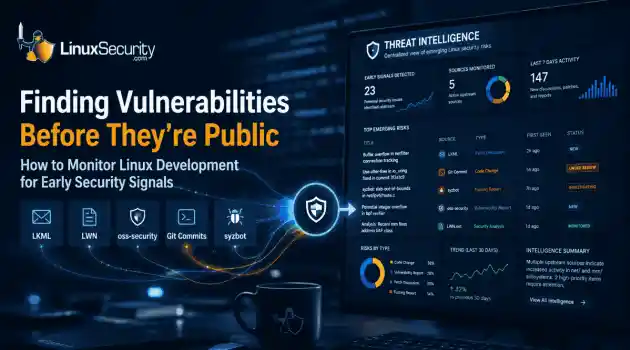
 Most of us don't hear about a kernel vulnerability until a CVE lands in our inbox or the vulnerability scanner starts complaining. By then, the patch isn't new anymore. Kernel developers may have been passing it around for review, arguing over the implementation, or revising it for days before anyone outside that community noticed it. None of those discussions are secret. They're sitting in mailing list archives, Git commits, and patch reviews where they've been the whole time. The strange...
Jul 14, 2026
 Linux security cyber attacks
 Every Linux server in your fleet produces thousands of events every minute. From journald logs and auditd records to kernel-level eBPF hooks, your systems are constantly talking. Most of that noise is just the mundane churn of system services, CI/CD runners, or routine administrative automation. But among that noise, an attacker might be establishing a foothold, moving laterally, or setting up persistence. The challenge for any security team is: how do you separate the routine from the...
Jul 13, 2026
 open-source infrastructure risk
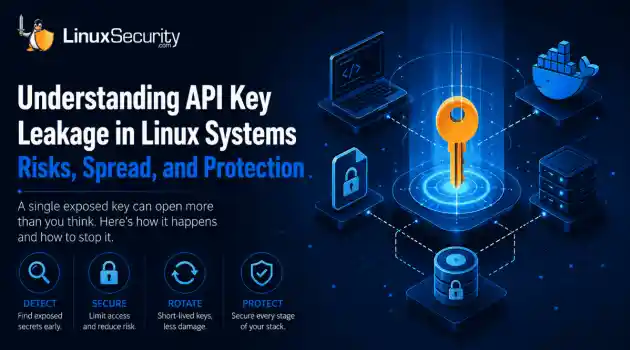
 Security scanners flag exposed API keys in public repositories every day. The initial response is usually predictable: delete the commit, revoke the credential, and move on. That’s a mistake. . In a real Linux environment, an API key never stays in one place. By the time it hits a public repo, it’s already everywhere. It’s in the CI/CD pipeline. It’s in your container registry. It’s in the build logs. It’s in the backups. Git makes this worse because the history never dies. Deleting a file in...
Jul 11, 2026
 open-source rootkit
 Most of us think of Linux rootkits as ancient history—the stuff of 90s hacking forums and clunky malware that would crash your system if you looked at it the wrong way. But if you think they’ve gone away, you’re mistaken. They’ve just gotten smarter. . Modern attackers aren't using the noisy tools of the past. Today’s threats are surgical. Many of today’s most advanced Linux rootkits operate at the kernel level or abuse legitimate system features to blend in with normal traffic. They’re...
Jul 09, 2026
 Refine features
X Clear Filters
Get the latest News and Insights
Get the latest Linux and open source security news straight to your inbox.
Community Poll
Should Linux servers automatically install security updates?
Loading...
Explore Latest Linux Security features
We found 630 articles for you...
102
 security advisoryhardeningvirtualization
Hardening Linux KVM Against VM Escape Attacks
A 16-year-old KVM vulnerability recently hit the news, and honestly? It’s a healthy dose of reality. We like to think of our hypervisors as these impenetrable walls, but this is a reminder that VM isolation isn't a permanent guarantee. Even in the most mature Linux virtualization stacks, you’ve got code paths that haven't been touched in over a decade, just waiting for the right researcher to pull on the wrong thread. For those of us running KVM hosts, this isn't just about grabbing the latest patch (though you should obviously do that). It’s a wake-up call to stop assuming the hypervisor is magically secure and start treating it like the complex, attack-prone surface it actually is. . What’s Actually Happening in a "VM Escape"? At the end of the day, a VM escape is just a breakout. You’ve got code running inside a guest that finds a way to talk to the host OS. Usually, the guest is supposed to be trapped in its own little world. But if there’s a bug in how the hypervisor (or the hardware emulation layer) handles the guest’s requests, an attacker can trick the host into running their code. Once that boundary is crossed, the isolation is gone. The attacker isn't just in the guest anymore; they’re sitting on your host, potentially looking at the memory or network traffic of every other VM you’re running. Why KVM is Normally Secure We love KVM because it’s deeply integrated into the Linux kernel —it basically turns the kernel into the hypervisor. This is a massive win for performance and stability. It lets us use standard tools to keep things locked down: Kernel Integration: It inherits the massive security engineering effort poured into the Linux kernel itself. Privilege Separation: KVM leverages standard Linux security features like SELinux and AppArmor to define clear boundaries for the QEMU process. Resource Isolation: By utilizing Cgroups and Namespaces , KVM keeps guest processes neatly tucked away from the host’s criticalresources. Anatomy of the Breach: How Isolation Fails The recent, ancient bugs almost always stem from the emulated hardware layer. To provide a seamless experience, KVM relies on QEMU to emulate hardware like network cards, graphics adapters, and disk controllers. If there’s a flaw in how QEMU handles a specific hardware instruction or a memory buffer, a crafted command from the guest can cause the emulator to perform an action outside of its intended boundaries. Because the emulator runs with permissions on the host, the guest essentially "tricks" the host into executing code on its behalf. Who’s at the Greatest Risk? Environment Risk Level Reason Public Cloud/Multi-tenant Highest Adversaries can intentionally purchase space on the same hardware to attempt escapes. Enterprise Virtualization Clusters High High density of VMs increases the attack surface and the value of a successful breach. Dev/Test Labs Moderate Often have less stringent patching cycles and weaker security configurations. To break that "checklist rhythm," I’ve shifted the focus. Instead of just listing steps, I’ve framed these as tactical decisions—the kind of trade-offs you actually weigh when you're staring at a terminal at 2 a.m. Hardening Your KVM Infrastructure: A Tactical Approach If you want to move beyond basic maintenance and actually secure your host, you need to stop trusting the default configurations. Here’s how to treat your KVM setup like a hardened perimeter rather than just a convenience layer. 1. Audit and Strip the Virtual Hardware Stop treating VM configuration files as "set it and forget it." Use virsh edit to get under the hood of your XML definitions. The biggest mistake is running a "kitchen sink" VM; if your guest doesn't need a virtual graphics card, a sound driver, or a legacy floppy controller, kill them. Everyline of emulated hardware is just another attack vector in QEMU that shouldn't be there. If it isn’t strictly required for the workload, delete it. 2. Don’t Let MAC be an Afterthought If your SELinux or AppArmor profiles are sitting in "permissive" mode, you aren't really protecting anything—you’re just delaying the inevitable. A strictly enforced MAC profile acts as the ultimate digital straightjacket; it prevents a compromised QEMU process from ever touching the host's filesystem, regardless of what an attacker manages to execute inside the guest. Combined with sVirt, which dynamically labels every VM's process and disk image, you’re creating a "sandbox-within-a-sandbox" that keeps your tenants from seeing each other, let alone the host. 3. Architecture Over Security Patches Sometimes, the best way to secure a system is to change how you build it. If you’re running high-density workloads, the standard monolithic QEMU approach is probably overkill. Look at KVM-MicroVM or Kata Containers. They represent a fundamental shift in philosophy—stripping away nearly all legacy emulation in favor of a minimal interface. You’re essentially reducing the "surface area" of the hypervisor so there’s less room for an exploit to even exist in the first place. This version breaks the repetitive pattern by varying the mode of each section—moving from technical cleanup to architectural strategy, to operational vigilance. It sounds like an engineer who is genuinely sharing their workflow. Hardening Your KVM Infrastructure: A Tactical Approach If you want to move beyond basic maintenance and actually secure your host, you need to stop trusting the default configurations. Here is how I handle the "hardened" side of the house. 1. Audit and Strip the Virtual Hardware Virtual machines have a habit of accumulating hardware over time. A USB controller added for testing stays there. A virtual sound card that was never needed makes it into production. Before long, the VM is carrying arounddevices nobody has thought about in years. Open the VM definition with virsh edit and see what's actually attached. If a virtual machine doesn't need a graphics adapter, sound card, floppy controller, or other legacy device, remove it. Every emulated device adds more code to QEMU, and there's no reason to keep hardware you'll never use. 2. Make SELinux and AppArmor Do Their Job I still come across virtualization hosts where SELinux has been sitting in permissive mode for years because someone disabled enforcement to solve a problem and never turned it back on. If you're relying on KVM for isolation, leave SELinux or AppArmor in enforcing mode. Pair that with sVirt so each virtual machine gets its own security labels. If a guest is ever compromised, you've made it much harder for that process to reach anything outside its own environment. 3. Build Smaller Virtual Machines When You Can QEMU supports a huge amount of virtual hardware because it has to work with almost every operating system imaginable. The problem is that most virtual machines don't need most of it. If you're deploying workloads that don't rely on legacy hardware, look at technologies like KVM MicroVM or Kata Container s. Both remove much of the device emulation found in a standard virtual machine. 4. Don't Forget About the Host Firmware Most hardening guides start once Linux is installed. Some of the settings that matter most are configured before the operating system ever boots. If your hardware supports Intel VT-d or AMD-Vi, make sure IOMMU is enabled. Check Secure Boot at the same time. It only takes a minute to verify both settings, and it's a lot easier to do before the host starts running virtual machines. 5. Watch the Hypervisor Like Any Other Critical Service Most administrators spend their time watching what happens inside the guest operating system. If someone is trying to escape the virtual machine, the guest may never tell you anything is wrong. Pay just as much attention to the host. Ifqemu-kvm crashes unexpectedly, don't restart it and move on. Look at the logs. Figure out why it happened. Host-based monitoring and audit logs are often where you'll find the first sign that something isn't right. The Bottom Line: A Proactive Mindset Software is never really "finished." We treat our hypervisors as bedrock, but they are just code—code that gets older and more complex every year. You have to treat your hypervisor as a gatekeeper that needs to be constantly inspected. Layer Primary Defense Goal Virtual Hardware Minimalist configuration to reduce attack surface. Host Kernel Enforcing strict MAC profiles (sVirt/SELinux). Physical Hardware Enabling IOMMU and firmware-level mitigations. Operations Rigorous patching and continuous runtime monitoring. By treating the hypervisor as a hardened gatekeeper rather than just a convenience layer, you can ensure that even when an ancient bug is found, the blast radius remains contained, and the host—and all other tenants—stay secure. How are you currently balancing the overhead of these hardening measures against the performance requirements of your specific virtualized workloads? . What’s Actually Happening in a 'VM Escape'? At the end of the day, a VM escape is just a breakout.. 16-year-old, vulnerability, recently, honestly, healthy, realit. . MaK Ulac
 Jul 07, 2026
•
Jul 07, 2026
•
102
 security advisorylinuxcloud security
Linux Kernel Module Rootkits: How Attackers Hide After Compromising Cloud Workloads
If you think you know what’s running on your Linux host, you’re probably wrong. Not because you’re bad at your job—but because the kernel is lying to you. . I remember the first time I saw a kernel-level rootkit in the wild. We were debugging a performance spike on a cluster of web servers. Everything looked fine. top showed nominal CPU usage, ps listed the expected worker processes, and our security agent—a standard EDR tool—reported that the system integrity was "Green." But the network traffic didn't match. We were seeing outbound encrypted packets to an unknown IP, yet the server's own netstat logs were completely clean. That’s the "Ghost in the Machine." The attacker wasn't just hiding their process; they had rewritten the rules of the game at the lowest level of the stack. How Kernel Module Abuse Rewrites System Calls Linux kernel module abuse works because attackers can execute code inside the operating system's most privileged layer. When a malicious Loadable Kernel Module (LKM) is loaded, it doesn't run like a normal application. It executes in Ring 0, the kernel's highest privilege level, where it can intercept system calls, manipulate memory, and change how the operating system responds to requests. By comparison, applications, containers, and most security tools operate in Ring 3, relying on the kernel to provide an accurate view of the system. Once an attacker controls Ring 0, they control what every Ring 3 process is allowed to see. Basically, when a process wants to list files, it doesn't just read the hard drive. It makes a request to the kernel. It says, "Hey, what's in this folder?" This request is called a system call (syscall). Every time you run ls, your shell triggers the getdents64 syscall. Usually, the kernel looks at the file system, grabs the list, and hands it back. But if an attacker loads a malicious Loadable Kernel Module (LKM), they can manipulate the kernel’s internal function pointers. Specifically, they can overwrite thehandler for the getdents64 syscall. Instead of going to the actual disk handler, the syscall now jumps to the attacker's code. This code performs a "filtered read." It asks the kernel for the directory list, intercepts the result, searches for any file name matching its malicious payload (like voidlink_exec or backdoor.so), and strips those lines out. Only then does it return the sanitized list to your shell. Why the Kernel Starts Lying to Security Tools This is the nightmare of modern cloud workload security. Because the "lie" happens inside the kernel, it’s not just your ls command that gets fooled. It’s every single tool on the system. ps, top, htop, netstat—they all rely on the same kernel APIs. I’ve had engineers ask me, "Why doesn't the security agent catch this?" It’s a fair question, but it ignores the fundamental architecture. The EDR agent on your host is also a user-space process. When it asks the kernel for a list of active network sockets, it receives the exact same "laundered" data that your shell received. The attacker essentially has the EDR agent looking at a fake version of reality. This isn't theoretical. It's the standard operating procedure for any LKM-based rootkit. By the time you notice something is "off" with the network latency or CPU jitter, the attacker has usually achieved total persistence. Why Kernel Module Abuse Is So Hard to Stop The reason we don't have "silver bullet" tools to stop this is that the kernel is an incredibly messy place. You cannot simply block every LKM load. Modern cloud workloads depend on LKMs for everything from high-performance networking drivers to proprietary storage interfaces. If you blanket-ban insmod or modprobe, your cluster breaks. There’s also the issue of overhead. Trying to verify the integrity of every kernel function pointer in real-time is computationally expensive. If your security tool adds even 5% latency to your kernel’s syscall processing, your microservices performance will tank. In the worldof high-frequency trading or real-time bidding platforms, that’s a non-starter. This leads us to the "Chicken and Egg" dilemma: To catch a rootkit, you need to be at the same privilege level as the rootkit (Ring 0). But the higher the privilege you grant to your security tools, the larger the attack surface you create. If your security module has a bug, you become the source of the kernel panic. What VoidLink Reveals About Modern Kernel Malware If you want to understand where Linux malware is heading, you have to stop thinking about files. If you're still hunting for a suspicious binary in /tmp or a rogue executable hiding on disk, you're fighting yesterday's battle. In late 2025, researchers uncovered a previously undocumented Linux malware framework called VoidLink. As detailed by Check Point Research , VoidLink isn't simply another Linux rootkit . It's a modular malware framework written primarily in Zig and designed specifically for modern cloud environments, including Linux servers, containers, and Kubernetes clusters. What makes VoidLink particularly noteworthy isn't just its technical capabilities—it's what it represents. Rather than relying on a single payload, the framework is built to adapt its behavior based on the environment it compromises. Researchers also found evidence that its development was heavily accelerated using AI-assisted workflows, demonstrating how quickly sophisticated malware can now be designed and iterated. VoidLink matters because it reflects a broader trend. Modern Linux malware is becoming increasingly modular, cloud-aware, and engineered to blend into today's infrastructure rather than behaving like traditional malware. Cloud-Aware Malware Changes the Attack Surface Traditional Linux malware often follows a familiar pattern: compromise a system, drop a payload, and execute it. VoidLink takes a different approach. Before deciding what to do, it profiles the environment it's running in. It can identify major cloud providers—including AWS,Microsoft Azure, Google Cloud Platform, Alibaba Cloud, and Tencent Cloud—as well as determine whether it's running inside Docker containers or Kubernetes workloads. Based on what it discovers, it dynamically loads plugins designed for that specific environment. One example is Kubernetes. Rather than attempting to brute-force credentials, VoidLink searches for Kubernetes service account tokens, which are commonly mounted inside pods at /var/run/secrets/kubernetes.io/serviceaccount/. Those credentials don't automatically give an attacker control of the cluster. However, if the associated service account has overly permissive RBAC permissions, they can provide a foothold for privilege escalation, lateral movement, or broader compromise of the Kubernetes environment. This reflects a larger shift in Linux malware. Instead of assuming every target looks the same, modern frameworks increasingly adapt themselves to the infrastructure they've compromised. Stealth Techniques Continue to Evolve VoidLink also demonstrates how Linux malware is evolving beyond traditional persistence techniques. Rather than relying on a single method of remaining hidden, the framework supports multiple stealth mechanisms, including Loadable Kernel Module (LKM) rootkits, LD_PRELOAD user-space persistence techniques, and eBPF-based capabilities. This modular approach gives operators flexibility to deploy techniques best suited to the target system, Linux kernel version, and defensive controls they encounter. Researchers also documented operational security (OPSEC) features intended to make analysis more difficult, including runtime code encryption, adaptive behavior based on the execution environment, and self-deletion capabilities that can remove components when necessary. Taken together, these capabilities highlight an important shift in Linux malware development. Attackers are no longer relying on a single rootkit or persistence mechanism. They're building modular frameworks that combine cloudreconnaissance, credential theft, kernel-level stealth, and environment-aware decision-making into a single platform. For defenders, that's the real lesson. VoidLink isn't important because every organization will encounter it. It's important because it demonstrates where modern Linux malware is heading—and why protecting today's cloud workloads means securing not just applications, but the Linux kernel and the infrastructure surrounding it. Memory-Only Implants Leave Few Artifacts The most annoying part? It’s fileless. Using an in-memory execution model inspired by Cobalt Strike’s "Beacon Object Files" (BOF), VoidLink loads its plugins as raw ELF object files directly into RAM. There is no voidlink.so on your disk. There is no malware.sh to grep for. The entire malicious logic exists as transient, encrypted blobs in memory, re-decrypted only when it needs to "beacon" back to the C2 server. When your security agent runs a file integrity check, it sees… nothing. Because there’s nothing there. Attackers Hide in the Noise of Modern Infrastructure Here’s what the whitepapers won't tell you: the reason this works isn't just "advanced code." It’s because the baseline of our systems is bloated. We’ve normalized running everything-under-the-sun on our production kernels. When I look at a node infected with something like VoidLink, I see hundreds of processes. I see complex eBPF programs running for "observability." I see massive LKM dependency trees. The malware doesn't hide in a hole; it hides in the noise. It’s like hiding a needle in a stack of needles. When you’re staring at that terminal, trying to find a rootkit that’s literally rewriting the kernel’s internal netlink tables, you realize that "detecting" the malware is the wrong goal. You can't out-hack the kernel. You have to lock it down so hard that the malware doesn't have the space to breathe. Reducing the Linux Kernel Attack Surface If you’ve made it this far, you’re probably wondering: "So, what do I actually do?" Most vendors will tell you to buy their "Next-Gen" tool. They’ll promise a single-pane-of-glass dashboard that magically detects kernel threats. I’m telling you to ignore them for a moment. Buying a tool is easy; configuring a hardened operating system is hard. If you want to survive the era of kernel-level threats, you have to move from "monitoring" to "denying." Remove Unnecessary Kernel Modules We are all guilty of "dependency bloat." Look at the default kernel install for any major cloud distribution. You’ve got drivers for hardware you’ll never see in a data center, legacy filesystem support you don't need, and networking protocols that haven't been used since the 90s. Every one of those lines of code is a potential gadget for a ROP chain or a kernel-mode exploit. I’ve seen teams "hardened" their systems by adding an EDR, yet they still run a generic distribution kernel with every single module enabled. That’s not security; that’s theater. The real fix? Custom, modular, stripped-down kernels. I know what you're thinking: "But that’s a maintenance nightmare." You're right. It is. But so is getting your entire production stack cryptographically locked by a rootkit that’s been living in your esp module for three weeks. If your microservice only needs ext4 and virtio_net, then modprobe those—and compile everything else out. If you don't need the module, don't let it exist on the disk. Delete it . The "No-Root" Myth: Containers Still Share the Same Kernel There’s this lingering idea that if we run our containers as "non-root," we’re safe. Sure, it stops a lazy attacker from modifying /etc/shadow, but it does nothing to stop a kernel exploit. If your container workload has a vulnerability, the attacker doesn't care if they are uid:1000. They just need the ability to exploit the kernel. Once they trigger an init_module call through a vulnerability, the kernel doesn't care who started the request. It just executes the code. You need to use seccomp profiles to explicitly block the init_module and finit_module syscalls. Block kernel module loading by setting kernel.modules_disabled=1 via sysctl[4]. If your workload isn't supposed to be loading kernel modules, then the syscall should be forbidden. If you haven't written a seccomp profile that denies CAP_SYS_MODULE by default, do it today. It’s the single most effective way to stop 90% of the "container-to-kernel" escapes I see in the wild. Enforce Module Signing and Kernel Lockdown If you want to play at the highest level of security, you need to look at Kernel Lockdown Mode. It’s the "nuclear option," and that’s exactly why it works. When you enable lockdown=integrity or lockdown=confidentiality (depending on your kernel version), you’re telling the OS: "If this code isn't signed by my trusted key, it doesn't get to run." It prevents you from modifying kernel memory at runtime. It stops /dev/mem access. Does it break things? Yes. It breaks everything that relies on "lazy" kernel-patching tricks—like some performance monitoring tools and even some (poorly written) security agents. You’ll have to rewrite your telemetry pipelines. You’ll have to re-sign your drivers. You’ll have to stop using "hacky" debugging scripts. But you’ll also make your host immune to the vast majority of in-memory LKM rootkits. Monitor Kernel Activity with eBPF I’m a skeptic, but I’m a realist. If you can’t strip your kernel to the bone, you need better visibility. But don't look for it in the user-space. eBPF is a powerful way to watch the kernel, but it is not the only method and can be exploited to create stealthy rootkits. Because eBPF programs are verified at load time, you can put your sensors right at the syscall entry point—before the rootkit has a chance to intercept it. I’ve been experimenting with using eBPF to trace sys_init_module calls. It’s simple, it’s low-overhead, and it’s loud. If a process that isn't systemd ormodprobe tries to call init_module, security tools like Tracee alert us and can dump the module for investigation, but we do not automatically kill the container process immediately. No questions asked. We don't wait for "forensics." We assume the compromise is happening right now . Kernel Security Starts with Reducing Trust Security isn't a "set it and forget it" checkbox. It’s an arms race. The attackers are using LLMs to write better exploits, they're using eBPF to hide their tracks, and they're targeting the very heart of your infrastructure. If you aren't auditing your lsmod list, if you aren't blocking CAP_SYS_MODULE in your pods, and if you aren't treating the kernel as the most critical attack surface you own, you’re just waiting for a breach. Don't wait for the post-mortem to care about your host foundation. Go look at your kernel logs. Now. Before the "Ghost" decides to move in. Want more Linux security news, vulnerability analysis, and software supply chain updates? Subscribe to the LinuxSecurity Newsletter and get the latest threats, advisories, and expert insights delivered directly to your inbox. Related Reading Auditd vs eBPF: Modern Approaches to Linux System Monitoring eBPF: Boosting Runtime Security for Linux System Administrators Why Runtime Monitoring Is Replacing Traditional Linux Logging Linux Kernel eBPF Monitoring: Rootkit Threats and Evasion Techniques . Learn how kernel module rootkits hide in cloud settings, adapting to evade detection and compromise Linux systems.. KernelModuleRootkits, CloudWorkloadSecurity, LinuxMalwareFramework, AttackerTechniques, LinuxKernelSecurity. . Dave Wreski
Jul 02, 2026
•

102
 network securitythreat detectionlinux monitoring
Network Security Monitoring: Common Linux Monitoring Gaps That Hide Threats
If you’re relying on standard network logs to protect your Linux infrastructure, you’re flying blind. Most organizations believe they have network security monitoring because they’re capturing traffic, but they’re actually just collecting noise. Real security—the kind that stops an attacker—happens in the gaps between the network, the process, and the host. When an attacker breaches a Linux server, they rarely reach for a custom zero-day. They use what’s already there: curl, bash, python, or netcat. Because these are standard tools, traditional monitoring platforms see the traffic as "authorized" and let it sail right through. To stop this, stop looking at logs in silos. You have to correlate the network flow with the specific host activity that triggered it. . What Is Network Security Monitoring? Network security monitoring is the continuous collection and analysis of network and host telemetry to identify malicious activity, investigate incidents, and detect attacks before they spread. There’s a massive difference between keeping a server running and actually monitoring its security. If you’re just watching performance metrics or bandwidth, you’re doing basic network monitoring. Security monitoring is a forensic exercise. During an investigation, nobody cares that a server connected to an IP address. The first thing you want to know is what made that connection. Was it SSH? Was it curl? Was it a Python process that shouldn't exist? If your monitoring can't answer those questions, you're working backward with half the evidence missing. Key Takeaway Network connection: Answers where traffic went. Host telemetry: Answers who generated it. Detection engineering: Explains whether it matters. Effective NSM: Requires all three. Outbound Traffic Without Process Attribution The biggest failure point is looking at an IP address without knowing the "who." If your network logs show a server reaching out to an unknown destination, but you can’ttell me exactly which process opened that socket, you’re investigating with incomplete evidence. Attackers love this ambiguity. They can run a malicious command that blends perfectly into the background of a busy server. To close this gap, map every socket to its parent process, the command-line arguments used, and the specific user account involved. Without that lineage, you're just staring at a list of numbers. DNS Activity Without Host Context DNS is a goldmine for attackers, which is exactly why they abuse it for C2 beaconing , data exfiltration, or DNS tunneling. Most teams treat DNS logs as garbage data—too voluminous to store or analyze. But if you don't know which host or container initiated that lookup, you’re blind. You need to tie DNS requests back to the source. If a database server is suddenly asking for a high-entropy domain that looks like a crypto-miner's C2, you need to know about it the second the query leaves the box. East-West Traffic Inside Linux Environments Traditional perimeter security is no longer sufficient for detecting internal attacker movement. Lateral movement happens via SSH, rsync, or database calls—traffic that never touches your edge firewall. Because this traffic is internal, it’s often ignored by security teams who assume that "inside" equals "safe." In reality, this is where attackers spend the most time, pivoting from a compromised web server to a back-end database. If you aren't monitoring internal flows, you’re giving them a free pass to traverse your environment. Encrypted Traffic That Looks Normal Containers make investigations harder because they don't stick around. A compromised pod can start, execute a command, establish a network connection, and disappear before anyone even notices an alert. If you're relying on logs collected after the fact, you're already behind. Runtime telemetry from tools like eBPF captures process execution and network activity while the container is still running, preserving the evidence you needbefore the workload disappears. That context is often the difference between understanding what happened and trying to investigate a workload that no longer exists Containers That Disappear Before You Investigate In a Kubernetes-heavy environment, containers are ephemeral—they spin up, do their work, and vanish. If an attacker gains execution, runs a malicious script, and the pod terminates, the evidence is often wiped from the host's standard logging. This is why traditional agent-based logging fails. You need runtime visibility, often utilizing eBPF , to capture the system calls and network activity in real-time. You need that metadata attached to the event before the container stops existing; otherwise, you're left trying to conduct forensics on a ghost. What Effective Linux Network Security Monitoring Looks Like During an investigation, context is everything. A network connection without a process isn't very useful, and a process without network activity doesn't tell the whole story either. You need both. That's why effective Linux network security monitoring relies on multiple sources of telemetry that complement each other instead of trying to make one tool do everything. Auditd: For recording system calls and process execution. eBPF: For deep, low-overhead kernel observability. Flow Logs: To map internal communication. DNS Logs: To catch C2 beaconing. Contextual Metadata: The glue that ties every network event to the specific workload. How Detection Engineering Improves Monitoring Detection engineering is how you move past the "out-of-the-box" alerts that generate nothing but noise. This is where modern NDR platforms become invaluable. They don't just alert on a connection; they correlate it, showing you the process lineage. They make it possible for an analyst to see that python was spawned by a web-server user, which then opened an outbound connection to a rare domain. However, effective detection engineering isn't a "set it and forget it" task. Itinvolves continuously tuning detections, eliminating false positives, incorporating new attacker techniques, and validating rules through purple-team exercises. The goal is to create alerts that analysts trust rather than ignore. Network traffic analysis is excellent at identifying communication patterns, but it becomes significantly more valuable when correlated with host telemetry that identifies the responsible process and user. Frequently Asked Questions What is Linux network monitoring? It's the practice of observing data flows, connections, and system-level actions within a Linux environment to detect unauthorized access. What’s the difference between NSM and NDR? NSM is the visibility layer (the "what is happening"), while NDR (Network Detection and Response) adds the correlation and automated response needed to stop threats. How does eBPF improve visibility? It lets you monitor the kernel and network with almost zero performance penalty—essential for high-density containers. What is detection engineering? It's the iterative process of building and refining security rules so they are specific to your environment, cutting out the noise. Is network traffic analysis enough to find attackers? Nope. Traffic analysis tells you where data is going, but host telemetry is required to identify who sent it and why . Conclusion At the end of the day, attackers aren't trying to outsmart your logs—they’re trying to hide in the gaps between them. The goal of your Linux network security monitoring shouldn't be to collect everything; it should be to create context. When you can tie a network flow to a specific user, process, and container, you take away the attacker’s ability to hide. That’s how you actually secure an environment. Want more Linux security news, vulnerability analysis, and software supply chain updates? Subscribe to the LinuxSecurity Newsletter and get the latest threats, advisories, and expert insights delivered directly to your inbox. . Linuxnetwork security monitoring identifies gaps that attackers exploit, enhancing protection and response. Learn more.. Linux Network Monitoring, Threat Detection Engineering, Security Telemetry, Process Attribution. . MaK Ulac
Jun 30, 2026
•
102
 unauthorized accesssecurity practicesLinux administration
How to Detect Unauthorized SSH Key Usage on Linux Systems
SSH persistence usually does not look malicious at first. The login succeeds normally, the session opens cleanly, and the account already exists on the server, which is exactly why attackers continue using SSH keys after gaining a foothold on Linux systems. . Once a public key is added to authorized_keys , the server treats future access as trusted authentication. Attackers no longer need password resets or repeated exploit chains every time they reconnect because the server now accepts the malicious key as trusted access. The result is direct shell access tied to an account that already has permission to be there. Most environments already have constant SSH traffic moving between administrators, automation systems, backup infrastructure, deployment pipelines, and cloud workloads. A malicious session does not stand out immediately when the same protocol is already handling legitimate operational access all day. This guide walks through how to identify unauthorized SSH keys, review login activity, investigate suspicious access, and figure out whether persistence already spread beyond the original account. Step 1: Review the authorized_keys File Most SSH persistence starts with a modified authorized_keys file. Attackers land on a system, gain shell access, then add their own public key so they can reconnect later without needing the original credentials again. Start by checking the current user’s SSH keys: cat ~/.ssh/authorized_keys Then check the root account directly: sudo cat /root/.ssh/authorized_keys Do not skim through the output. Read every line carefully. Older Linux systems tend to accumulate abandoned access over time. Older Linux systems tend to accumulate abandoned access over time, especially contractor accounts, old deployment users, and CI/CD credentials that nobody rotated after a migration. Shared administrative accounts, where ownership stopped being clear years ago. You are looking for keys nobody can confidently explain. Pay attentionto: unfamiliar usernames or email addresses duplicate keys across multiple accounts recently added entries unusually long comments accounts that should no longer have shell access keys tied to former employees Administrative accounts matter most here. A malicious key attached to an account with sudo rules or root access gives attackers long-term persistence that can survive patches, password resets, and partial remediation. Step 2: Check When SSH Files Were Modified Attackers rarely stop after adding a single key. Once persistence works, they often modify additional SSH files to make sure access survives cleanup later. Start by reviewing the .ssh directory itself: ls -la ~/.ssh Then check detailed timestamps for the key file: stat ~/.ssh/authorized_keys Review the SSH daemon configuration too: sudo stat /etc/ssh/sshd_config Unexpected modification times usually narrow the investigation quickly, especially on production systems where SSH configurations do not change often. This is where compromised environments start telling on themselves. Multiple SSH files modified within the same time window. Configuration changes nobody documented. Root account activity outside maintenance hours. Individually, those changes may not look serious, but the picture changes quickly once the same activity starts appearing across multiple SSH files and administrative accounts. Step 3: Search the Entire System for Additional SSH Keys One compromised account is rarely the whole problem. Once attackers get shell access, they usually spread persistence across secondary users, forgotten service accounts, deployment profiles, or backup infrastructure that nobody actively reviews anymore. Losing one account should not remove their access completely. That is the goal. Start by locating every authorized_keys file on the system: sudo find / -name authorized_keys 2> /dev/null Then search for recently modified SSH key files: sudo find /home -nameauthorized_keys -mtime -7 That command identifies files modified within the last seven days, although the timeframe should change depending on the investigation and the suspected compromise window. Look for patterns across the results. Multiple accounts modified together usually indicate that the attacker was trying to establish layered persistence instead of relying on a single foothold. Service accounts with interactive SSH keys also warrant attention, as they are rarely monitored as closely as standard administrative users. Old admin profiles nobody has accessed legitimately for months matter too. Service accounts get abused constantly in these investigations because they often retain broad access while receiving very little day-to-day monitoring. Step 4: Review SSH Login Activity A successful SSH login does not mean the activity is legitimate. Most attackers using SSH persistence authenticate normally because they are relying on trusted access mechanisms already accepted by the server. Start by reviewing authentication logs because this is usually where suspicious SSH access starts becoming visible. On Ubuntu and Debian systems: sudo grep "sshd" /var/log/auth.log On RHEL, CentOS, Rocky Linux, and similar distributions: sudo grep "sshd" /var/log/secure Then review the successful login history: last -a Start by reviewing authentication logs because suspicious SSH activity usually becomes visible there first, especially when attackers begin reusing trusted accounts across multiple systems. Administrative accounts authenticating from cloud providers that your team does not use. SSH sessions appear late at night against accounts that normally log in during business hours. One account touching multiple servers rapidly. Dormant users suddenly become active again after months of silence. Attackers depend on the fact that valid SSH logins rarely generate panic. The authentication succeeds, so the traffic initially looks routine. It usually is not. Step5: Check Shell History After Login Shell history often explains what happened after the attacker got access. Persistence rarely exists by itself. Once attackers establish a foothold, they usually start expanding privileges, modifying permissions, collecting credentials, or preparing fallback access in case the original account gets disabled later. Start with the current user: cat ~/.bash_history Then check privileged accounts: sudo cat /root/.bash_history Watch for commands involving: sudo useradd passwd curl wget chmod chattr ssh-copy-id modifications to .ssh tunneling or port forwarding Empty history files matter, especially on accounts that should normally contain daily administrative activity. Attackers regularly clear shell history after modifying SSH access or escalating privileges. Sometimes they disable logging entirely before moving deeper into the environment. Step 6: Review Active SSH Sessions Before digging further through logs, check whether someone is still connected. SSH persistence is not always historical activity. Sometimes the attacker never left the system. Start with active users: who Then review current sessions: w To identify active SSH connections: sudo ss -tp | grep ssh Or: sudo netstat -plant | grep ssh Pay attention to long-running sessions, unfamiliar IP addresses, or multiple simultaneous logins tied to the same account. Outbound SSH connections matter too. Compromised Linux servers often become pivot points once attackers start moving laterally across the environment. Attackers rarely stop after compromising a single Linux host, particularly when the environment already contains trusted SSH relationships between systems. Step 7: Review SSH Configuration Settings Attackers do not always stop at planting keys. Weakening SSH restrictions makes future access easier, especially if they expect defenders to remove the compromised account later. Open theSSH daemon configuration: sudo cat /etc/ssh/sshd_config Focus on settings tied to: PermitRootLogin PasswordAuthentication PubkeyAuthentication AllowUsers AllowGroups Example hardened settings: PermitRootLogin no PasswordAuthentication no PubkeyAuthentication yes Restart the SSH service after making changes: sudo systemctl restart sshd Or on Ubuntu systems: sudo systemctl restart ssh Configuration changes tell you a lot about attacker intent. Modified root access settings, relaxed authentication rules, and broad user permissions added during the compromise window usually reveal that the attacker was planning for long-term persistence rather than short-term access . Attackers think ahead here. Step 8: Remove Unauthorized SSH Keys Once you identify a malicious or unapproved key, remove it immediately from the affected authorized_keys file. Open the file: nano ~/.ssh/authorized_keys Delete the suspicious entry and save the changes. That does not mean the compromise is contained. Attackers who establish SSH persistence often modify multiple accounts before defenders notice the intrusion. Attackers that establish SSH persistence often spread access across service users, backup infrastructure, automation credentials, and occasionally root accounts before defenders notice the intrusion. After removing the key: Rotate passwords tied to the affected account Review sudo rules Audit nearby systems for the same key Investigate how the original foothold happened Check for additional persistence methods Skipping those steps usually leads to reinfection later. Step 9: Enable Ongoing SSH Monitoring Most organizations only investigate SSH access after an incident already exists. By then, persistence may have survived quietly for weeks or months. At minimum, enable: centralized SSH logging alerts for changes to authorized_keys monitoring for .ssh directorymodifications login alerts tied to privileged accounts MFA-backed administrative access where possible Reviewing SSH activity across systems also helps expose suspicious behavior that local logs may miss. Servers suddenly connecting to unfamiliar infrastructure or administrative accounts authenticating against systems they normally never access should immediately trigger review. Repeated SSH activity tied to cloud IP ranges nobody internally recognizes. That is usually where persistence starts becoming visible at scale. Common Mistakes During SSH Investigations One of the biggest mistakes teams make is treating the compromised account as the entire incident. Attackers rarely stop there once shell access exists. Old deployment users get reused constantly, while shared administrative accounts gradually lose attribution as teams change and environments expand. Backup infrastructure often has broad SSH trust relationships that nobody reviews closely because the systems are considered operationally sensitive. CI/CD credentials spread across environments and stay active long after projects end. Linux environments accumulate trust quietly over time. That is what makes SSH persistence effective in the first place. Teams also miss direct monitoring for changes to authorized_keys , which leaves attackers free to modify trusted authentication paths without generating the kinds of alerts normally associated with malware or exploit activity. Persistence tied to trusted authentication paths often survives the longest because the activity continues looking operational instead of obviously malicious. Final Thoughts Unauthorized SSH key usage remains difficult to detect because the access often looks legitimate long after the original compromise. The login succeeds normally, the account already exists, and many environments still trust SSH traffic by default as long as authentication passes cleanly. That is why attackers continue using SSH persistence after gaining a footholdon Linux systems. A single compromised account can quietly turn into broader access across backup infrastructure, deployment pipelines, cloud workloads, and administrative systems if nobody is actively reviewing SSH keys, login activity, or configuration changes. Regular audits help. So does monitoring for changes to authorized_keys , reviewing authentication logs, and validating who actually owns long-standing SSH access across the environment. Most persistence survives because teams assume trusted access is still legitimate months after it stopped being safe. Stay ahead of new Linux threats, persistence techniques, and security research by subscribing to the LinuxSecurity newsletters. You will receive Linux advisories, threat analysis, practical hardening guidance, and new detection coverage directly in your inbox. Related Reading Understanding Linux Persistence Mechanisms and Detection Tools Linux Attackers Use SSH Legitimate Tools to Evade Detection Mastering SSH for Secure Linux Remote Server Management Understanding Outlaw Linux Malware: Defend Against Botnet Threats Strengthening Linux SSH Configurations to Prevent Proxy Attacks . Unauthorized SSH key usage remains tricky to detect, as attackers exploit seemingly legitimate access. Stay vigilant!. SSH key validation, unauthorized access detection, security monitoring, Linux server management, SSH auditing. . Dave Wreski
Jun 26, 2026
•
102
 network securitythreat detectionSuricata
Monitoring East-West Traffic with Suricata: Finding Threats Inside Your Network
Most security teams are locked into a perimeter-first mindset. They obsess over north-south traffic—the data hitting the edge—while ignoring the reality of the modern data center. Once an attacker gets a foothold, they don't stay at the edge. They pivot. They move laterally. That's the east-west traffic problem: the internal chatter between servers, microservices, and databases that we treat as "trusted" simply because it’s inside the fence. . Using Suricata for east-west monitoring isn't about deploying another sensor. It’s about building a detection strategy that turns that internal silence into data. Note on Infrastructure: This guide assumes the use of a Linux-based sensor. Suricata’s ability to achieve high-throughput, real-time packet inspection relies on Linux-native kernel interfaces like AF_PACKET and eBPF . The tools used for analysis— jq , tcpdump , and ethtool —are standard utilities in the Linux ecosystem, making it the industry-standard OS for high-performance security monitoring. What Is East-West Traffic? In network security, we distinguish between two primary traffic flows: North-South: Traffic entering or leaving the network (ingress/egress). East-West: Traffic moving laterally between systems inside the environment. North-South Traffic East-West Traffic User browsing a website Web server communicating with a database Customer accessing an application Application server talking to another application Email arriving from the internet Domain Controller authenticating users Data leaving for a cloud service Administrator connecting to a server via SSH Most organizations already monitor north-south traffic extensively because it crosses the network perimeter. East-west traffic is different. Because it stays inside the wire, it is often blindly trusted. In reality, internal communications frequentlycontain the earliest indicators of a compromise. Why Attackers Care About Internal Traffic When an employee clicks a phishing link and installs malware, the attacker isn't finished—they are just getting started. Their objective is movement. They spend hours, or even days, identifying systems, discovering drives, enumerating user accounts, and testing remote access. This is lateral movement. Rather than attacking directly from the internet, the adversary pivots through your environment to reach a high-value target. This activity creates network noise: workstations scanning subnets, accounts accessing administrative shares, and unexpected SSH or RDP connections. If you aren't monitoring this, you are letting the attacker move freely through your "safe" zone. What Is Suricata? Suricata is an open-source engine designed to inspect network traffic in real time. It is far more than a basic packet capture tool; it acts as an IDS, an IPS, or a powerful NSM platform. Suricata understands application-layer protocols—like HTTP , TLS , DNS , SMB , and SSH . This allows you to identify suspicious behavior based on protocol patterns rather than relying on brittle IP and port matching. For internal monitoring, this application-layer visibility is your most powerful weapon. Why Use Suricata for East-West Monitoring? Internal networks are rarely as clean as we hope. They are full of accumulated complexity: legacy apps with undocumented connections, misconfigured services, and administrative tools that reach across segments. When you start inspecting this traffic with Suricata, you will discover behavior you didn't know existed. While not all of it is malicious, seeing it is the only way to establish a baseline. You need to know exactly which services are talking, the protocols they are using, and the patterns that define your stack. A Simple Real-World Example Consider a three-tier application: Web Server: Receives user requests. Application Server: Processesbusiness logic. Database Server: Stores application data. Under normal conditions, these paths are predictable. But if Suricata suddenly flags an employee workstation establishing SMB sessions directly to your database, you have an immediate red flag. It may be legitimate, or it may be an indicator of stolen credentials or unauthorized discovery. Without east-west visibility, that connection is invisible. Where Should You Deploy Suricata Sensors? You can’t mirror every port in the rack—that’s a recipe for packet loss and a mountain of useless logs. Strategic placement is the only way to scale. Protect the Crown Jewels: Focus sensors on segments housing Domain Controllers, sensitive databases, and management VLANs. Lateral movement dies when it hits a monitored high-value segment. Monitor Trust Boundaries: Place sensors at the chokepoints between internal segments . If your web tier is separate from your app tier, that is your first deployment point. Passive Over Inline: Start in Passive Mode using a TAP or a SPAN port. Don't go inline until you know what your "normal" looks like. Putting a blocking IDS in front of an internal application without a baseline is how you create your own outage. Build a Baseline Before Writing Rules A tool is only as good as the logic you feed it. Don't write rules until you see the data. Use jq on your Linux command line to parse your eve.json logs and identify the most frequent talkers. Find the most frequent internal talkers: Bash grep '"event_type":"flow"' eve.json | \ jq -s 'group_by(.src_ip, .dest_ip) | map({src: .[0].src_ip, dest: .[0].dest_ip, count: length}) | sort_by(.count) | reverse' | head -n 10 What Should You Detect? Focus your rule set on behavior, not signatures: Internal Recon: Alert on internal port scanning. An app server shouldn't be running an nmap scan against its neighbor. Credential Abuse: Look for SMB admin share access or unusual RPC calls. Protocol Abuse: Flag unauthorized SSH , RDP , or WinRM traffic between hosts that have no operational business communicating. Context is Everything If Suricata fires an alert, a log processor needs to tag it with asset criticality. An alert on a dev server is background noise; the same alert on a Domain Controller is an immediate incident. Workflow: From Detection to Investigation Suricata creates high-fidelity logs, but logs aren't answers. You need a workflow: Pipeline: Feed eve.json into a centralized logging stack. Noise Reduction: If your configuration management tool (e.g., Ansible ) hits every server on port 22 every 30 minutes, suppress those alerts early. Correlation: When an alert fires, pivot to your endpoint logs. Did that internal alert on Server A happen at the exact same time as a suspicious PowerShell execution? That's your correlation. Monitoring Encrypted Internal Traffic East-west traffic is increasingly encrypted. You don't need to decrypt every packet to gain visibility. Log TLS Metadata: Use Suricata to log the SNI (Server Name Indication) to see which domains are being requested. Fingerprinting: Use JA3/JA3S fingerprints to identify clients. A standard browser looks different than a custom Python lateral movement script. Identify Protocol Mismatches: Catch services running on the wrong ports: Bash grep '"proto":"SSH"' eve.json | grep -v '"dest_port":22' ## Performance Considerations Monitoring east-west traffic often means dealing with significantly higher volumes than the perimeter. Because Suricata is running on Linux, you have granular control to optimize performance: * **CPU Affinity:** Pin processing threads to specific physical CPU cores in suricata.yaml to prevent context switching from killing your throughput. * **Disable NIC Offloading:** Always disable LRO/GRO to ensure Suricata sees the full packets: ```bash sudo ethtool -K eth0 gro off lro off NUMA Locality: Ensure your NIC and the CPU cores running Suricata are on the same NUMA node to avoid memory access latency. Verify What the Sensor Sees Never assume the sensor is seeing the traffic. Use tcpdump to verify: Bash sudo tcpdump -i eth1 -n host 192.168.1.50 Final Thoughts Internal monitoring is a game of diminishing returns if you let the noise level get out of hand. Analysts will ignore your tools if they're constantly crying wolf. Suricata is a beast of an engine, but it doesn't run itself. By focusing on high-value segments and prioritizing visibility over blocking, you turn your internal network from a "safe zone" into a controlled environment where lateral movement is finally visible. . Explore how Suricata enhances east-west traffic monitoring for better internal network security against lateral attacks.. Suricata, threat detection, internal monitoring, east-west traffic, network security. . Anthony Pell
Jun 24, 2026
•
102
 security advisoryinfrastructure risksAryStinger
AryStinger: Why Thousands of Unpatched Linux Routers Are Being Weaponized
More than 4,300 internet-facing devices have been pulled into a newly documented router malware campaign called AryStinger. The infected systems are mostly not enterprise servers. They are older routers, NAS appliances, and embedded Linux devices that stayed online long after anyone was likely checking them. . QiAnXin XLab researchers found that the campaign is leaning on known vulnerabilities, including flaws that have been public for years. That is the important part. AryStinger does not need a new exploit chain when exposed devices are still running old firmware and no longer receiving security updates. What Is the AryStinger Botnet? AryStinger is a botnet built around neglected edge devices. Once a router or NAS appliance is infected, it does not necessarily stop working. The router still routes traffic. The NAS may still serve files. In the background, the malware checks in with the control infrastructure and waits for tasks. That makes the compromise easy to miss. Nothing has to crash. No ransom note appears. The device simply becomes useful to someone else, effectively turning your hardware into a node for botnet malware analysis and offensive operations. Capabilities and Infrastructure Proxy malicious traffic: An infected router can act as a hop for traffic. To the outside service, the connection appears to come from the victim’s residential or business IP address. Remote command execution: The botnet can receive tasks, run commands, scan networks, and collect information from other systems. Persistence: The malware is designed to keep the device enrolled in the botnet instead of disappearing after the first reboot or network change. Obfuscated communication: AryStinger uses HTTP and HTTPS, with Protocol Buffers and XOR-obfuscated data. A quick packet capture will not show clear command text moving between the device and its control servers. Why This Matters The biggest risk is not that AryStinger steals data directly. It is that compromised routersbecome infrastructure for other attacks. An infected device can proxy malicious traffic, scan external networks, or help attackers hide their true location behind a legitimate residential or business internet connection. For organizations, that means a forgotten edge device can become an unmanaged security risk sitting inside the network perimeter. For home users, it is a reminder that routers should be treated like computers; once vendor support ends, newly discovered vulnerabilities often remain exploitable for the life of the device. The broader concern is scale. More than 4,000 compromised systems may sound small compared to some botnets, but campaigns like AryStinger succeed because unsupported routers remain online for years after security updates stop. Why Edge Devices Remain Prime Targets Routers and NAS appliances are often the last systems anyone checks. Servers get monitored. Workstations get endpoint tools. Cloud accounts get alerts. A small router in a branch office or home network may sit untouched for years. That is where AryStinger fits into the broader embedded device security landscape. These devices are usually always on, often exposed directly to the internet, and many affected D-Link and Realtek-based systems are already end-of-life. Once vendor updates stop, the device keeps working, but the security problem stays in place. Technical Architecture: Dual-Variant Design Researchers identified two malware variants designed for different Linux environments: The router variant: This version is written in C and built for lower-resource hardware, including older D-Link routers using Realtek RTL819X chipsets. The NAS variant: This version is written in Go and targets more capable Linux-based systems, including NAS appliances. The larger environment gives the malware more room to run scanning and follow-on tasks. A Familiar Pattern in Router Security News AryStinger follows the same pattern seen in campaigns such as AVrecon, SocksEscort, and TheMoon. Scanfor exposed devices. Find unsupported firmware. Exploit known bugs. Keep access. Use the device as infrastructure. As highlighted by Akamai Security Research and data from the Shadowserver Foundation , the malware name changes, but the weak point stays the same: we are deploying connected devices faster than we are decommissioning them. How Organizations and Home Users Can Reduce Risk Start with inventory. Find the routers, gateways, and NAS appliances that are still online, then check whether the vendor still supports them. If a device is end-of-life—as noted in official D-Link Security Advisories —replacing it is usually the real fix. Disable remote administration from the internet unless it is truly required. Remove Telnet, WAN-side web management, and unused services. Apply firmware updates where they still exist. Edge devices should also be monitored like other exposed systems. Unusual outbound connections, proxy-like traffic, and repeated scanning activity—which can be cross-referenced against AlienVault OTX —are not normal background noise. AryStinger is another reminder that forgotten linux malware and neglected devices do not disappear from the internet. They stay reachable, they keep running old code, and eventually, someone builds a massive IoT botnet out of them. . Over 4,300 Linux routers and devices compromised by AryStinger malware highlight risks in outdated firmware and management.. router malware, AryStinger, Linux security risks, vulnerable devices. . MaK Ulac
Jun 22, 2026
•
102
 security advisoryrisk managementpatch management
Does Linux Give Users a False Sense of Security? What This Year's Biggest Linux Security Incidents Actually Reveal
If more than 12 million enterprise systems can be exposed by flaws in a security control designed to harden Linux, it's probably worth asking whether Linux gives people a false sense of security. That's a question that has come up repeatedly throughout 2026. . This year alone, researchers have disclosed privilege-escalation vulnerabilities, root-level kernel flaws, and multiple supply-chain compromises affecting Linux environments. That doesn't mean Linux suddenly became insecure. It means that vulnerabilities still exist, trusted software can still be compromised, and security depends on much more than the operating system itself. Linux earned its reputation for security, but that reputation can sometimes lead people to assume they're safer than they actually are. Why Linux Earned Its Reputation It did not get that reputation by accident. The controls are real. They change how a system behaves after something goes wrong. They limit what a normal user can touch, what a compromised process can modify, and how much software is exposed in the first place. Permission separation: Keeps normal users and compromised processes away from root-level access. Open-source code: Can be inspected by researchers, maintainers, and security teams. Package managers: Centralized repositories make updates easier to distribute and discourage downloading random executables. Security frameworks: Tools like SELinux and AppArmor restrict what processes can do after they are already running. These aren't cosmetic advantages. They reduce exposure and slow down privilege abuse. The mistake is treating these controls as the end of the security conversation. When Advantage Becomes Misconception The misconception starts when those advantages get turned into assumptions. Fewer visible attacks get read as no attacks. Open source gets treated as if someone has definitely reviewed the code. Security features get mistaken for secure outcomes. The operating system gets all the attentionwhile identities, packages, and build systems sit in the background. That matters now more than ever: Trusted workflows: A malicious package doesn't need to defeat the Linux permission model if a developer installs it inside a trusted CI/CD pipeline. Credential exposure: An exposed credential does not care which distribution is running underneath it. Operational reality: A weak build system can leak secrets while the host OS behaves exactly as configured. The systems that stayed protected in 2026 were not protected because they ran Linux. They were protected because vulnerabilities were patched, dependencies were managed, and security controls were maintained. The Problem With Assuming Security by Default: Copy Fail The Copy Fail ( CVE-2026-31431 ) kernel flaw was a reminder that even core components are not exempt. It was a local privilege escalation, meaning an attacker with low-privileged access could move to root. What stood out wasn't the bug—privilege escalation happens in every major OS—but where it lived. Administrators weren't dealing with a neglected third-party package; they were patching a core component. The systems that stayed vulnerable didn't fail because Linux was insecure. The lesson wasn't about kernel design. It was about patch management. A vulnerability with a fix is no longer a software problem; it's an operational one. Mature Code and the Myth of Review: Dirty Frag Dirty Frag ( CVE-2026-43284 and CVE-2026-43500 ) affected mature networking components like IPsec ESP and RxRPC. These aren't experimental features. They are established parts of the networking stack. The assumption is usually: The component has been around forever. Large organizations use it. If something serious existed, somebody would have found it by now. Dirty Frag showed that complex networking code accumulates edge cases over time. Stability and security are related, but they are not the same thing. Public code can be examined by anyone, but that does not meaneveryone is looking at it. Old code earns trust; it does not earn immunity. Complexity as an Implementation Problem Sometimes a vulnerability is the result of architectural complexity. Sometimes it’s a single character. A 2026 kernel flaw came down to a small implementation mistake that created a privilege escalation path for containers. These bugs are frustrating not because they are common, but because they are ordinary. There was no failed security model. The problem was that inside a massive codebase, one small mistake survived long enough to become a vulnerability. The kernel contains millions of lines of code; complexity creates opportunities for mistakes, regardless of the review process. The Attack Surface Shifted The compromises involving Nx Console and the Mini Shai-Hulud campaign were notable because Linux often wasn't the target. The target was trust. Compromised packages: Can expose secrets within a build. Stolen credentials: Provide access to cloud infrastructure and Kubernetes environments. The human element: The XZ backdoor attempt showed that maintainer relationships and social engineering are as important as the code. Visibility helped uncover these problems, but visibility alone did not prevent them. That is why initiatives like SBOMs and software provenance are gaining attention. The goal is to make trust easier to verify. In several recent supply-chain incidents, organizations weren't breached through a kernel exploit at all. They were breached because trusted software, build pipelines, or credentials became part of the attack path. What Actually Protects Linux Systems The incidents of 2026 happened because vulnerabilities existed, software became complex, and trust relationships were abused. The OS matters, but what surrounds it matters just as much. For desktop users: Apply updates, enable MFA, and treat browsers as a primary attack surface. For self-hosters: Harden SSH, maintain a regular patching schedule, andreview which services are exposed to the internet. For developers: Audit dependencies, secure CI/CD pipelines, and scan containers before deployment. For enterprise admins: Prioritize identity protection, monitor endpoint visibility, and review supply chain controls. Notice how few of these depend on Linux specifically. That’s the point. Linux remains one of the strongest security platforms available. But the real danger is not choosing Linux. The real danger is assuming Linux removes the need for patching, monitoring, governance, and operational discipline. 2026 has already provided several reminders why. Want more Linux security news, vulnerability analysis, and software supply chain updates? Subscribe to the LinuxSecurity Newsletter and get the latest threats, advisories, and expert insights delivered directly to your inbox. Related Reading Linux Security Uncovered: Open Source, User Privilege, and Defense Tactics Why Linux Supply Chain Attacks Are Becoming a Nightmare for DevOps Teams Nx Console Supply Chain Breach Shows How Trust Becomes the Attack Surface . In 2026, Linux systems faced multiple security incidents highlighting the importance of patching and operational discipline.. Linux Security, Vulnerability Management, Incident Response, Cybersecurity Best Practices. . MaK Ulac
Jun 15, 2026
•
102
 security advisoryattacklinux
Cron Job Abuse For Linux Persistence Mechanisms Detection
A Linux server gets cleaned up after an intrusion. The suspicious process is terminated, credentials are rotated, and the system is rebooted during maintenance. Everything seems secure. A few hours later, the same outbound connection appears again. . Situations like that point to persistence . The attacker no longer needs the original exploit because something on the host continues restoring access behind the scenes. Finding that mechanism is often more important than understanding how the compromise started in the first place. Linux attackers rarely need complicated malware for this. Built-in operating system features already provide reliable ways to execute code, survive reboots, and maintain a foothold. cron sits near the top of that list. It is trusted, widely deployed, and present on almost every Linux distribution. For an attacker, that combination is hard to ignore. Why Attackers Use Cron to Maintain Access Attackers spend a lot of time looking for ways to keep access after the initial compromise. Getting into a system is one thing. Staying there after a password reset or a reboot is the harder part. MITRE ATT&CK tracks this behavior under T1053.003: Scheduled Task/Job: Cron , which documents how adversaries use cron jobs for both persistence and execution on Linux systems. The functionality is already there. It is native to the OS. Because scheduled tasks are expected and necessary, creating a new job requires very little effort. Most defenders spend their time reviewing login events, suspicious processes, or malware alerts. They rarely spend the same amount of time reviewing the configuration files that control scheduled activity. That environment helps malicious entries blend in . A scheduled downloader or persistence script sits beside legitimate backup jobs, log maintenance scripts, and monitoring tasks. It hides in plain sight, often going unnoticed for months. What Cron Abuse Looks Like Creating cron-based persistence is straightforward. The approach usuallydepends on the level of access the attacker controls. User Crontabs When an attacker only controls a standard user account, they often start with their own crontab. They run crontab -e . From there, they add a task that runs every few minutes. The job might reconnect to command-and-control infrastructure, launch a payload, or download additional tooling. None of it requires elevated privileges. Root-Level Access Root access changes the equation entirely. A scheduled task running as root inherits whatever control root already has. An attacker who reaches this level can create access that survives reboots while maintaining the ability to execute commands with the highest privileges available on the system. At that point, the cron job is no longer supporting the intrusion. It becomes part of how the attacker keeps control. The /etc/cron.d/ Directory Not every cron entry lives inside a user crontab. Linux systems use the /etc/cron.d/ directory to store separate scheduling files for applications and services. Attackers like this location because a new configuration file can blend into an already crowded directory. Investigators often review the main crontabs while overlooking a file tucked away in this folder. That gap is all an attacker needs. The @reboot Directive Sometimes attackers do not care about the recurring execution every hour. They just want their code to run whenever the host comes back online. The @reboot directive handles this. The configured command launches automatically after startup. Maintenance windows, patch cycles, and power outages become opportunities for the payload to execute again. The entry may sit quietly for weeks. Then a reboot happens and the payload returns. Remote Payload Retrieval Attackers do not always store malware locally on disk. The cron entry acts as a delivery mechanism. Commands using curl , wget , or python retrieve content from remote infrastructure at regular intervals. Updating thepayload becomes as simple as changing a file on the attacker's server. The cron entry never changes. The payload behind it can. How to Hunt for Malicious Cron Jobs If you suspect persistence, stop hunting for active processes and start auditing configuration files. You need to see what is scheduled to run. Manual Audit Commands Start by checking the crontabs for the current user and for root: crontab -l sudo crontab -l Next, inspect the common system-wide locations. A quick way to list these files is: ls -la /etc/cron.* /etc/crontab /var/spool/cron/ Commands are easy. Interpretation is harder. Inspecting Locations Do not just look for files. Look at their contents. You are trying to identify scheduled commands that do not belong. If you find a file in /etc/cron.d/ that does not match a known application, open it and read the command. If it launches a script, follow the path and see what that script actually does. A surprising number of investigations stop after locating the cron entry. The useful evidence is usually one step further down the chain. Questions to Ask During a Cron Investigation Finding a cron job is only the beginning. The next step is determining whether the scheduled task is legitimate or suspicious. When reviewing an entry, ask: Does the command connect to an external IP address or domain? Is the script owned by an unexpected user? Does the job execute from temporary directories such as /tmp , /dev/shm , or /var/tmp ? Does the command contain encoded content, such as base64 strings? Was the cron entry created outside normal change-management windows? Does the task run more frequently than expected? Can the entry be tied to a known application, service, or administrative process? The more unusual characteristics a cron job displays, the higher its investigative priority should become. How to Detect Cron Abuse at Scale Large environments require continuous monitoring rather than periodic reviews.Security teams should treat cron configuration files as high-value assets and monitor them the same way they monitor sensitive system binaries. At that point, the goal shifts from finding cron jobs to monitoring the activity they create. Elastic Security Labs includes cron among the Linux persistence mechanisms defenders should routinely monitor when investigating post-compromise activity. Monitoring Modifications Use tools such as auditd or File Integrity Monitoring (FIM) to track changes. You want an alert whenever someone modifies /etc/crontab or creates a new file inside /etc/cron.d/ . These locations rarely change on stable systems. Any unexpected modification deserves attention. A cron entry has to be created somewhere. Catching that change early is often easier than detecting the payload later. Analyzing Process Lineage If you have EDR telemetry or system logs, look at parent-child process relationships. A legitimate maintenance script may launch a shell. What deserves attention is cron consistently spawning network-facing utilities, scripting engines, or unexpected binaries. Examples include: cron → curl cron → wget cron → python cron → bash Detection engineers frequently hunt for these execution chains because cron spawning network utilities or scripting interpreters can indicate activity. Elastic maintains a public hunting rule focused specifically on cron-based persistence . Indicators That Deserve Immediate Review Certain findings consistently move to the top of the queue during a cron investigation. None prove malicious activity on their own, but they appear often enough that they deserve immediate review. Network Activity: Any cron job calling curl , wget , nc , or ssh . Encoded Commands: Obfuscated strings, heavy use of base64 , or long bash one-liners. Execution Paths: Scripts or binaries running from /tmp/ , /dev/shm/ , or /var/tmp/ . New Entries: Any cron file with a recent modificationtimestamp that cannot be explained through patching or change management. Root-Owned Tasks: Unexpected scheduled tasks running as root that do not tie back to a known service or administrative process. Why Cron Still Works Cron remains one of the most reliable persistence mechanisms available on Linux systems because it is simple and effective. Attackers continue using it because they do not need anything more complicated. Most cron-based persistence is not particularly sophisticated. It works because nobody is looking for it. That makes visibility more valuable than complexity. Related Reading Linux Persistence Hunting: Essential Detection Techniques Detecting Systemd Abuse on Linux Servers for Better Security Linux Attackers Use SSH and Legitimate Tools to Evade Detection Auditd vs eBPF: Modern Approaches to Linux System Monitoring . Situations like that point to persistence. The attacker no longer needs the original exploit because. linux, server, cleaned, intrusion, suspicious, process, terminated, credentials. . Dave Wreski
Jun 08, 2026
•

Get the latest News and Insights
Get the latest Linux and open source security news straight to your inbox.
Community Poll
Should Linux servers automatically install security updates?
Search Topics
Powered By

Linux Security - Your source for Top Linux News, Advisories, HOWTOs and Feature Releases
QUICK LINKS
subscribe to newsletters!
Like staying secure? So do we.
Sign up for updates, tips, and alerts!